The Best Bachelorette Trip Ever!!!

There are two things you should know before I tell you about my bachelorette in New Orleans.

First, I’m a planner. The kind of person who has a colour-coded itinerary, restaurant reservations booked weeks in advance, and a backup plan for the backup plan.

Second, I had absolutely no idea what we were doing for three days. :p

My best friend planned every minute of the trip. Every reservation, every surprise, every meal. My only responsibility was to get on the flight. For someone whose default setting is “let me just check…”, handing over the reins felt strangely freeing. I trusted her completely, and looking back, I think that changed the way I experienced New Orleans.

Our weekend started somewhere over the clouds with Crazy Rich Asians playing on the seatback screen. A few hours later, we’d landed, checked into the Roosevelt, dropped our bags, and headed straight to Ruby Slipper.
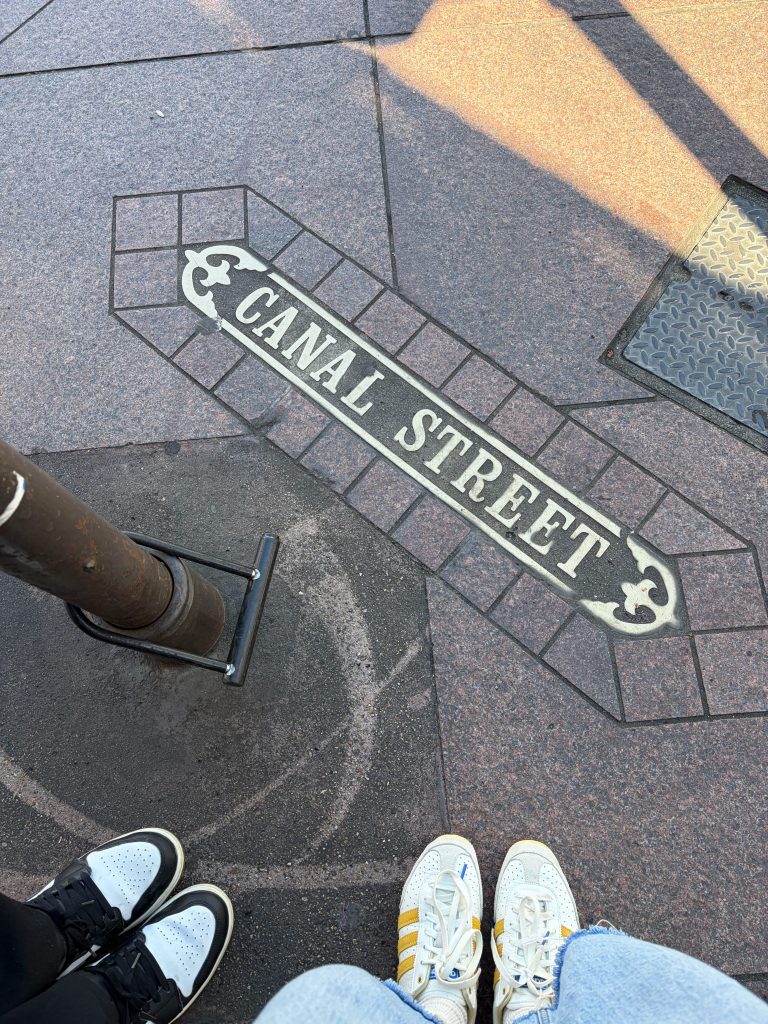
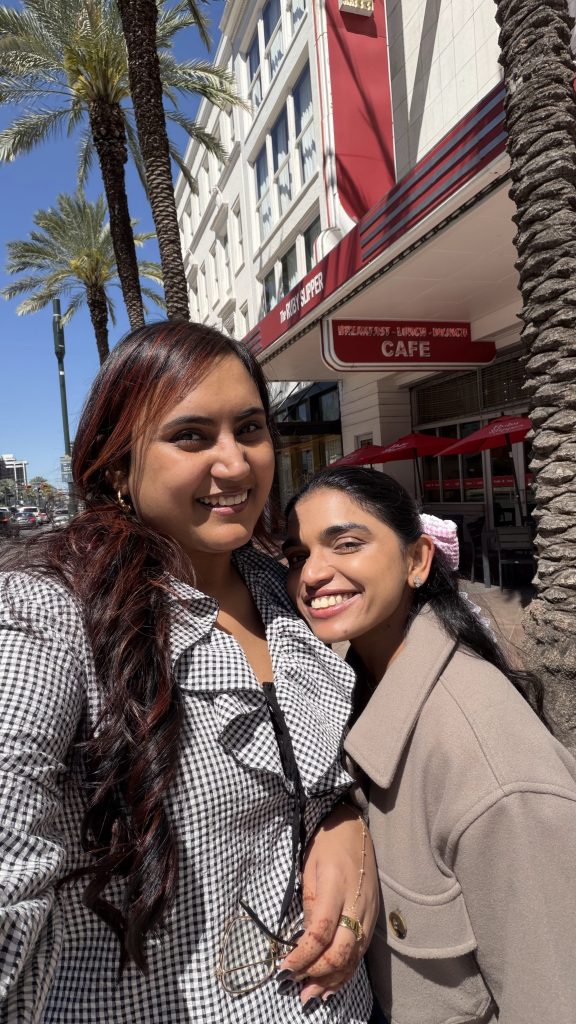
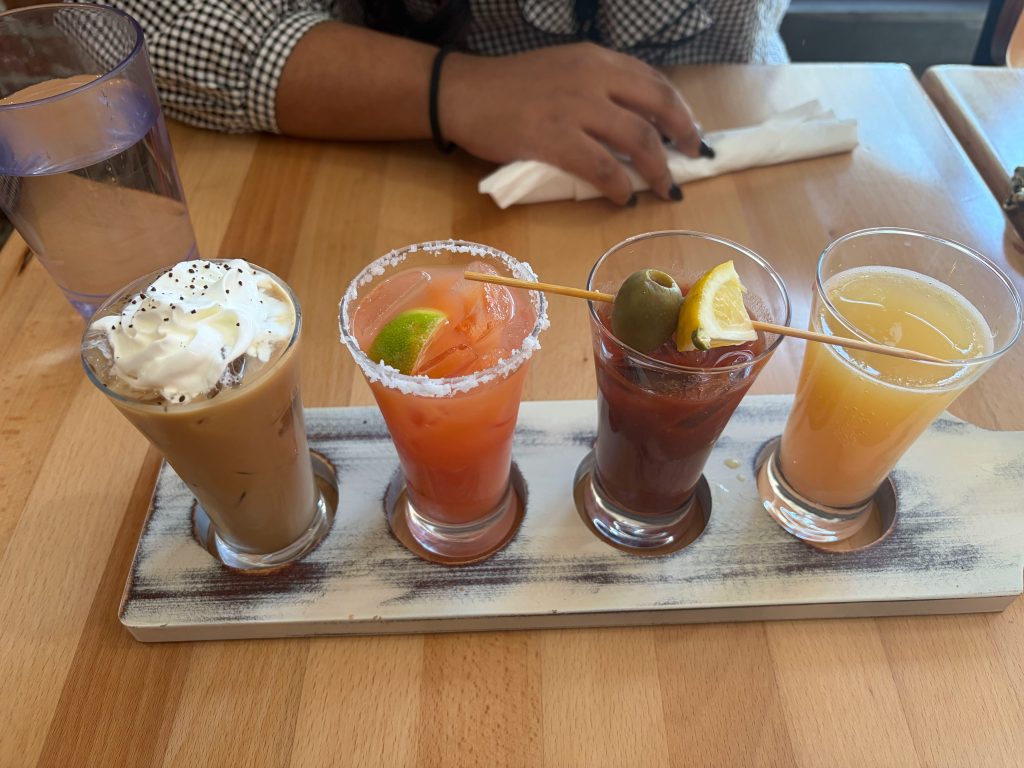
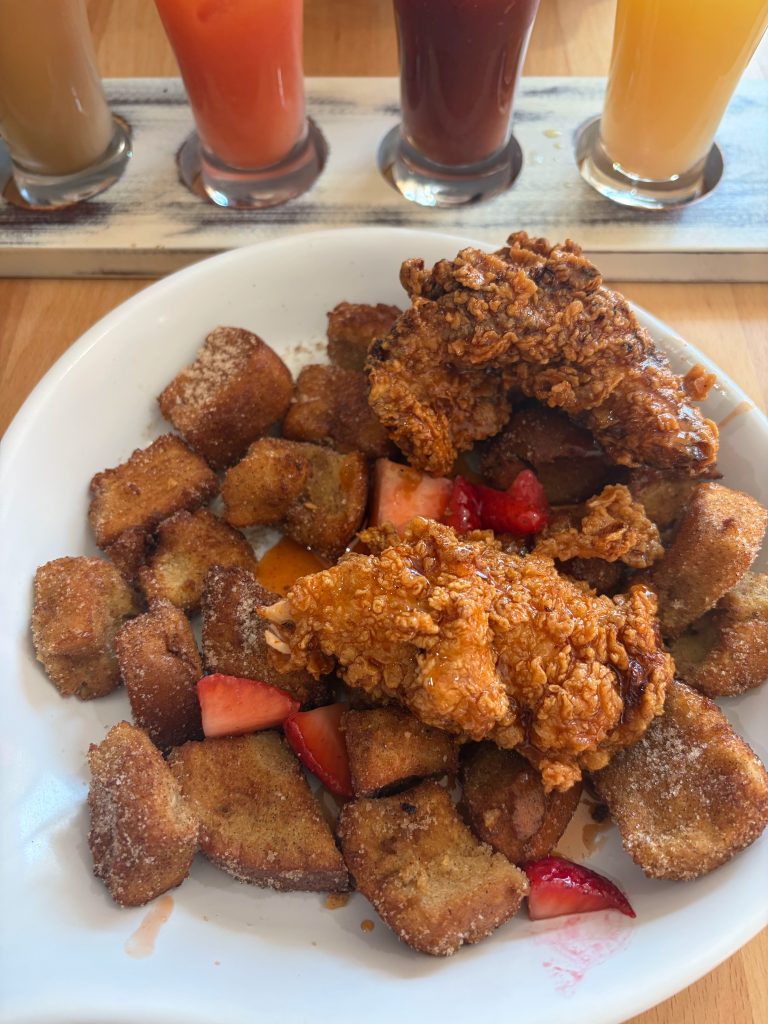
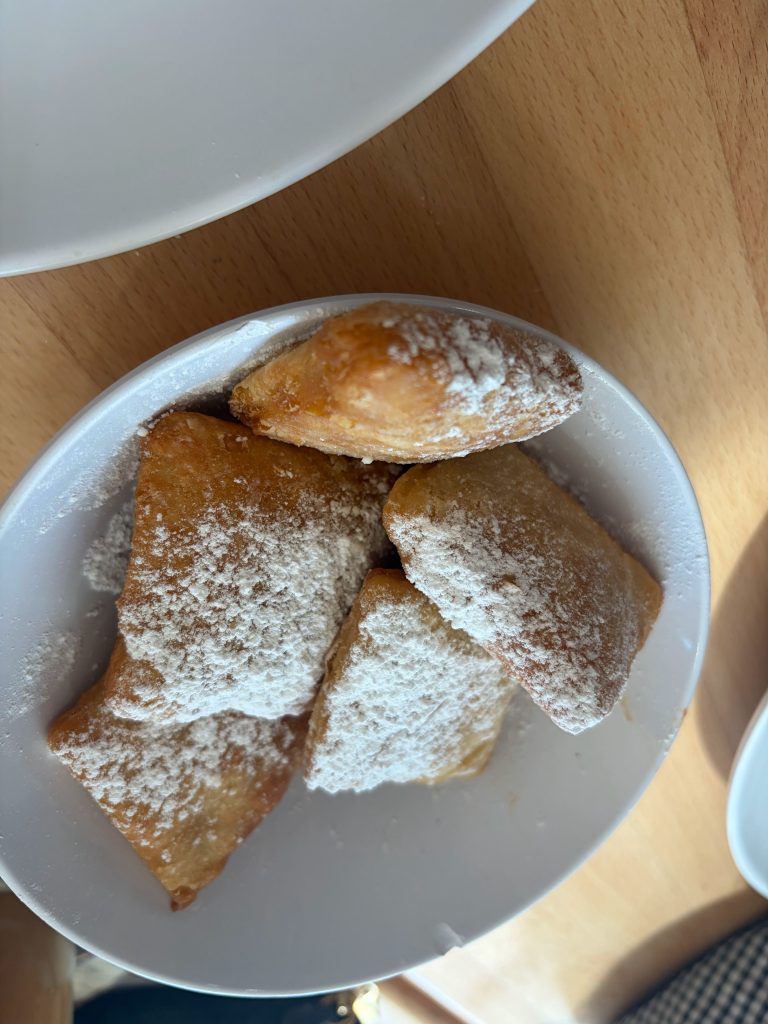
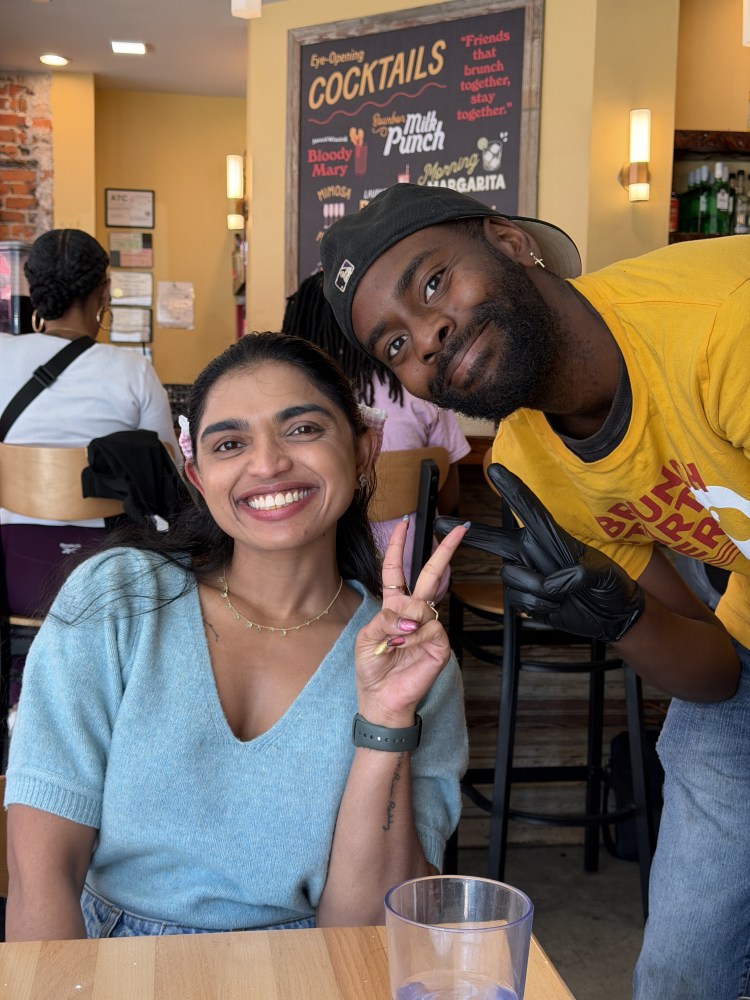
If there was ever a way to announce to your stomach that you’re on holiday, it was with a table full of cocktail floats, waffles, French toast and beignets. We also learned something important: neither of us likes Bloody Marys, despite giving them yet another chance. We met Eric over brunch, and by the time we left, it felt like we’d known him much longer than an hour.

That became a theme.

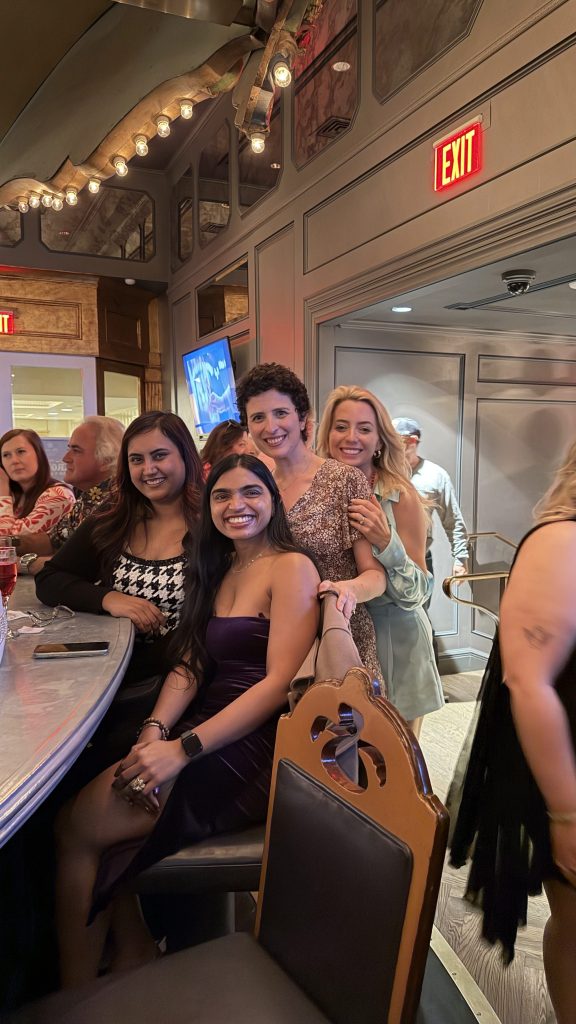
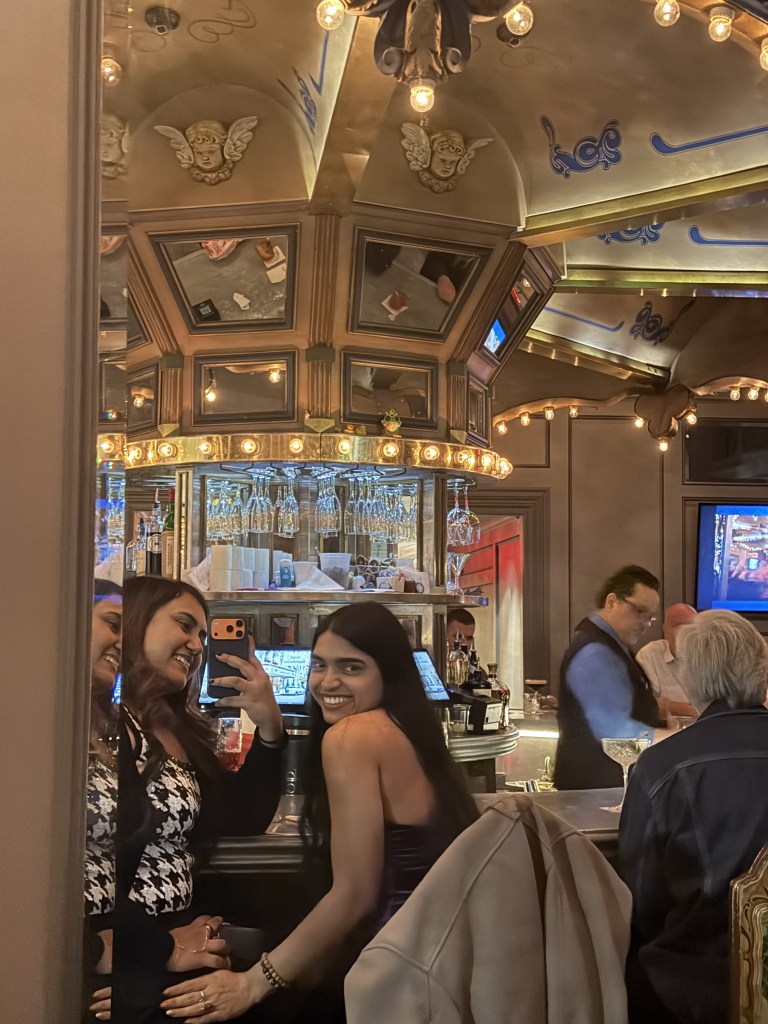
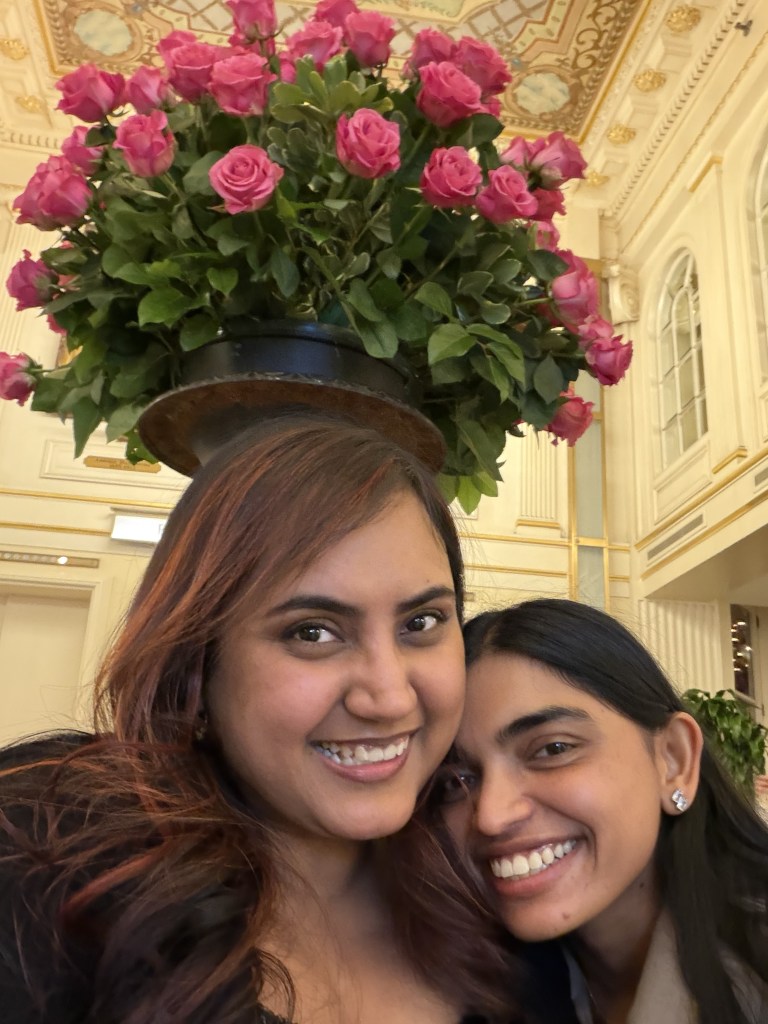
Everywhere we went, people became part of the story. A waitress at Salon Salon who insisted on joining one of our photos. Two groups we met at Carousel Bar who turned one drink into a whole evening. A true crime guide who happened to be a lawyer working with murder victims and had lived for six months in one of New Orleans’ most infamous haunted murder houses. Complete strangers we’d end the night talking to over one last drink.

Looking back, I don’t remember the buildings first.

I remember the people.
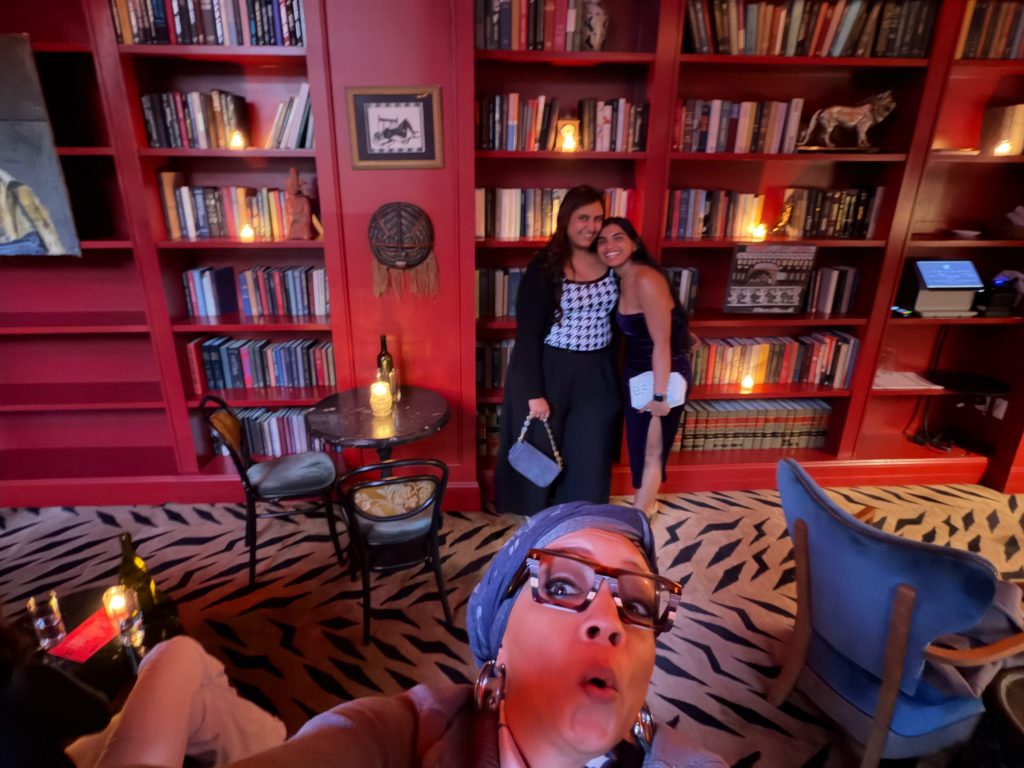
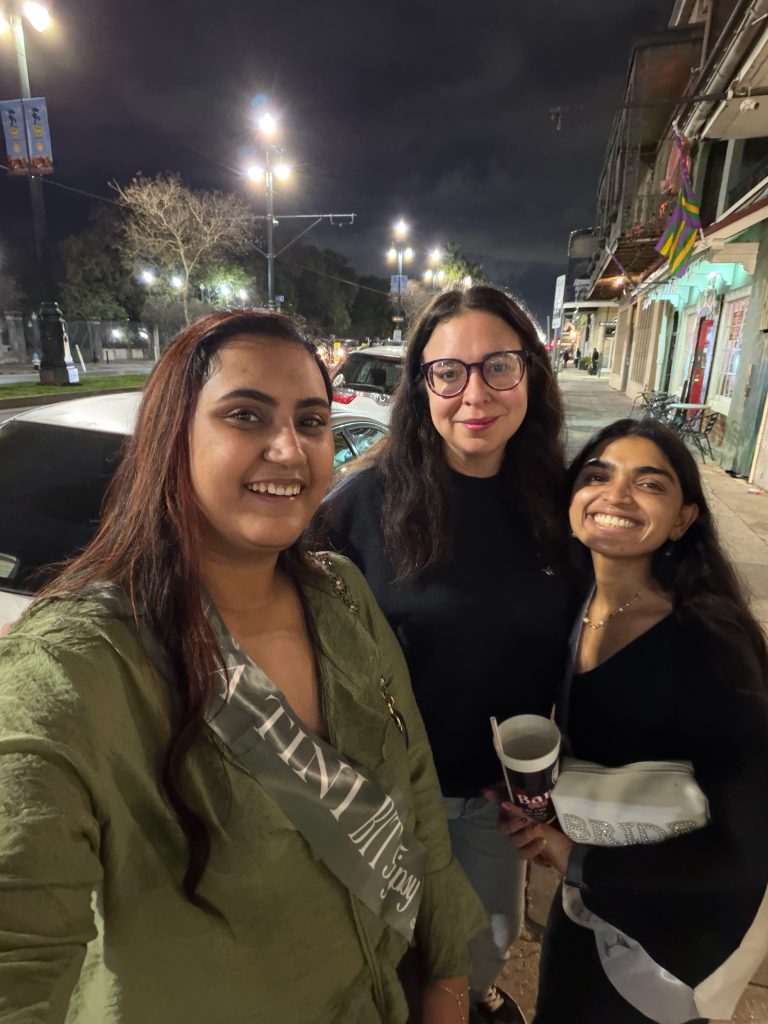
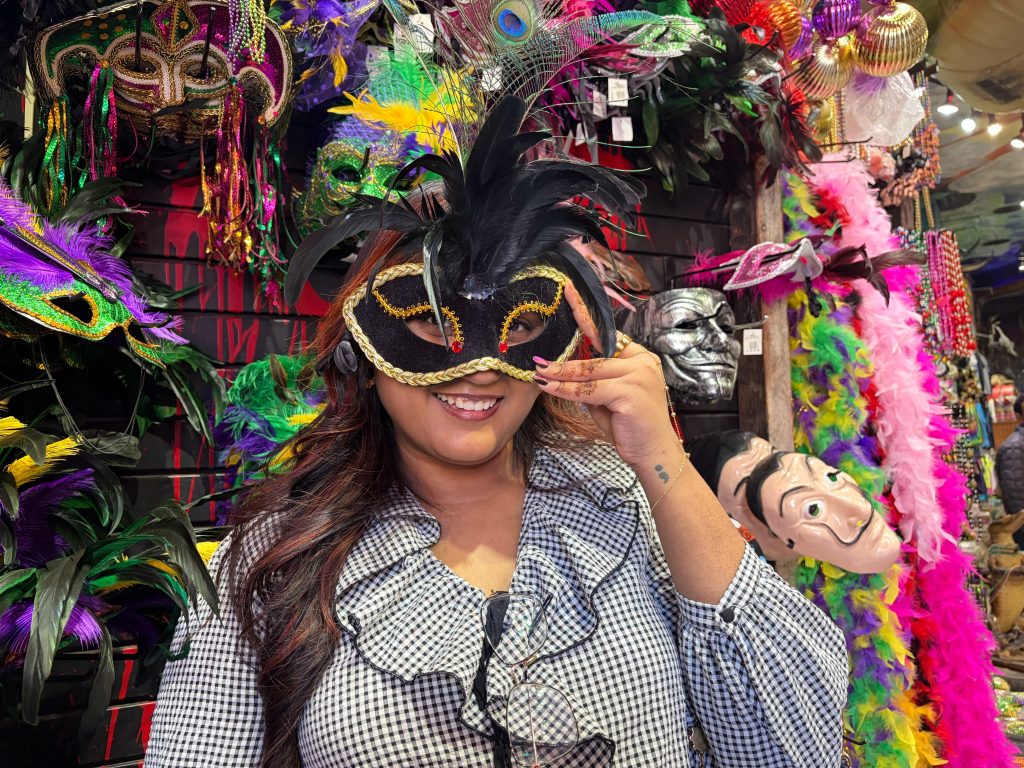
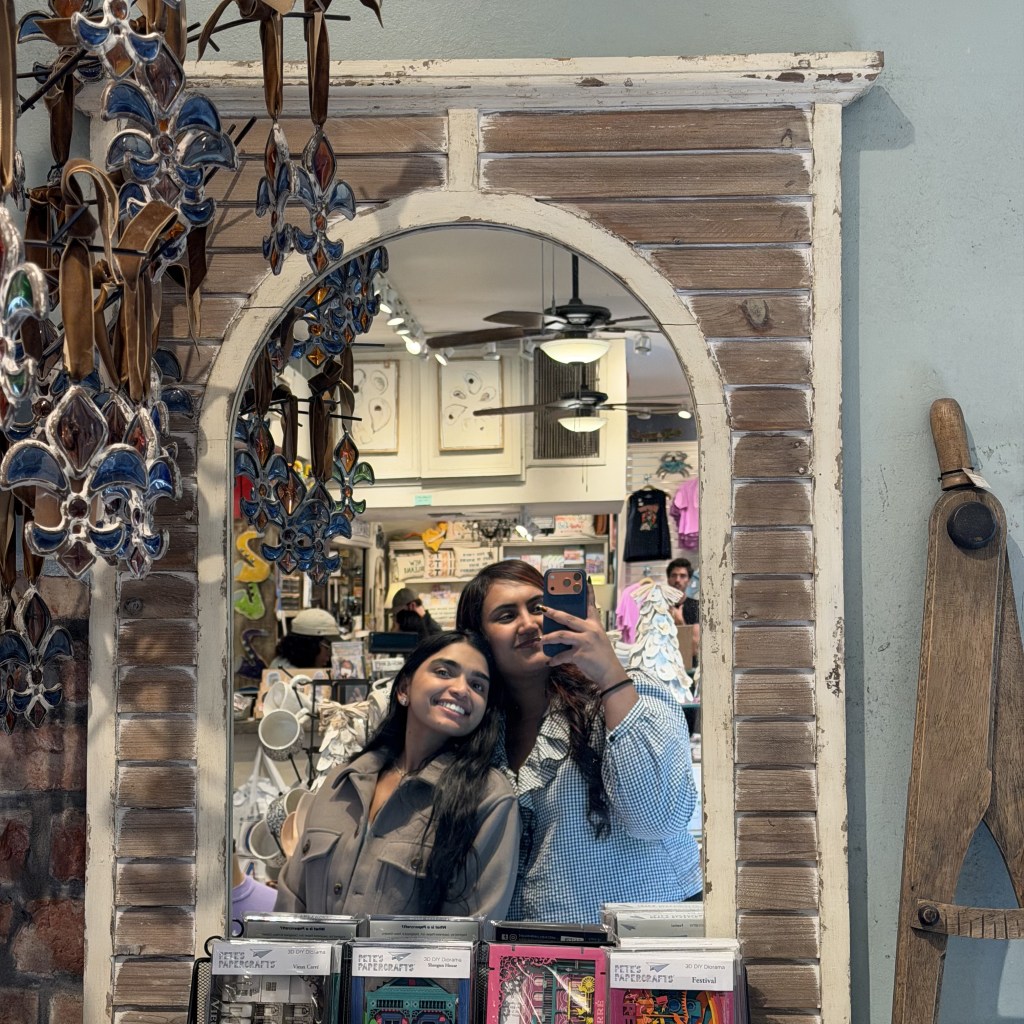
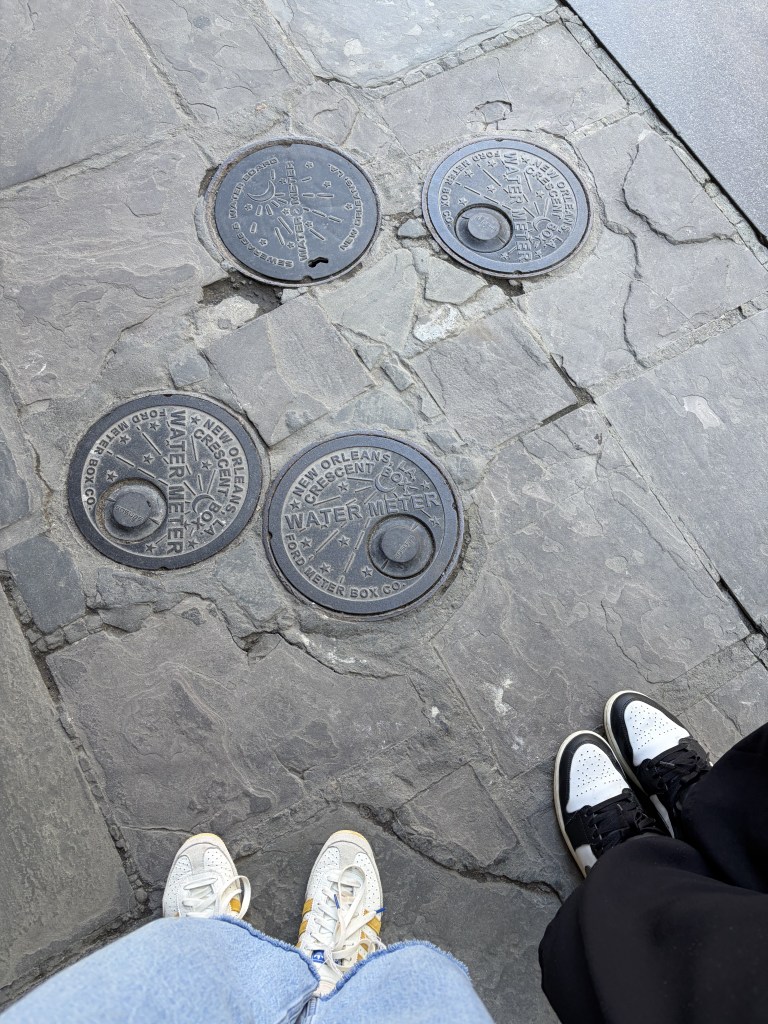
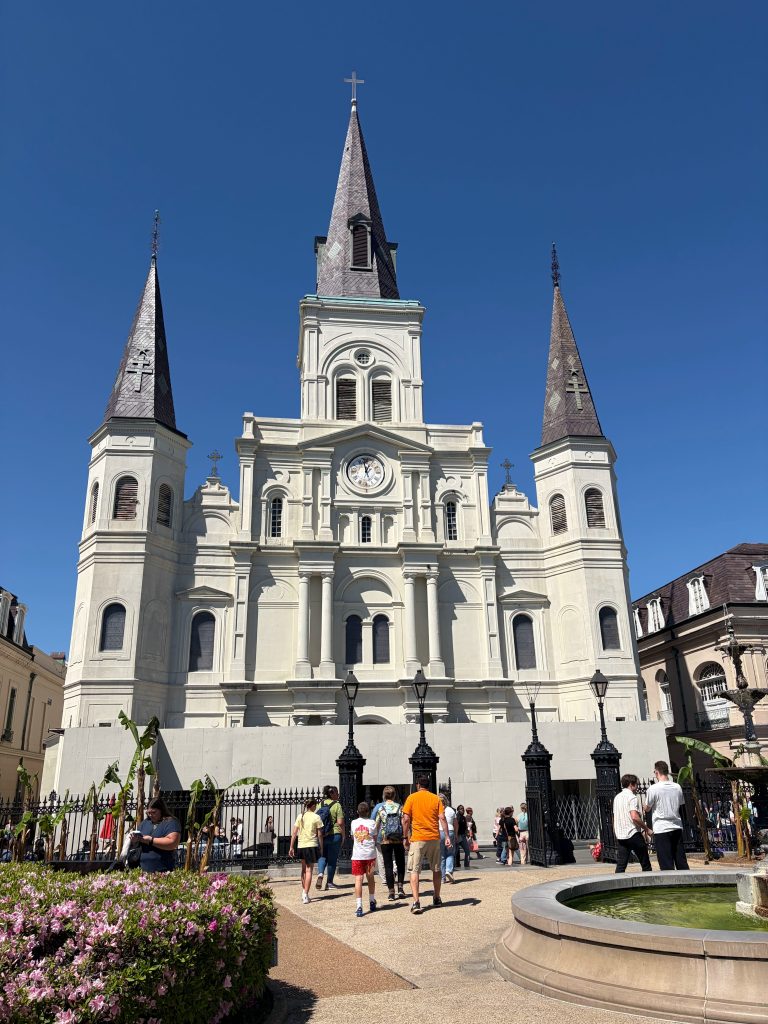
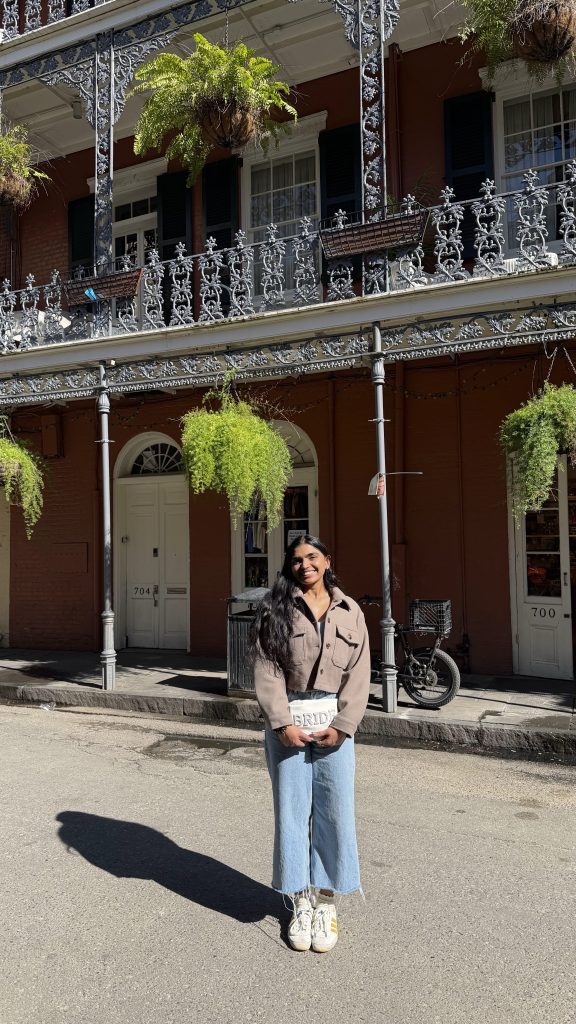
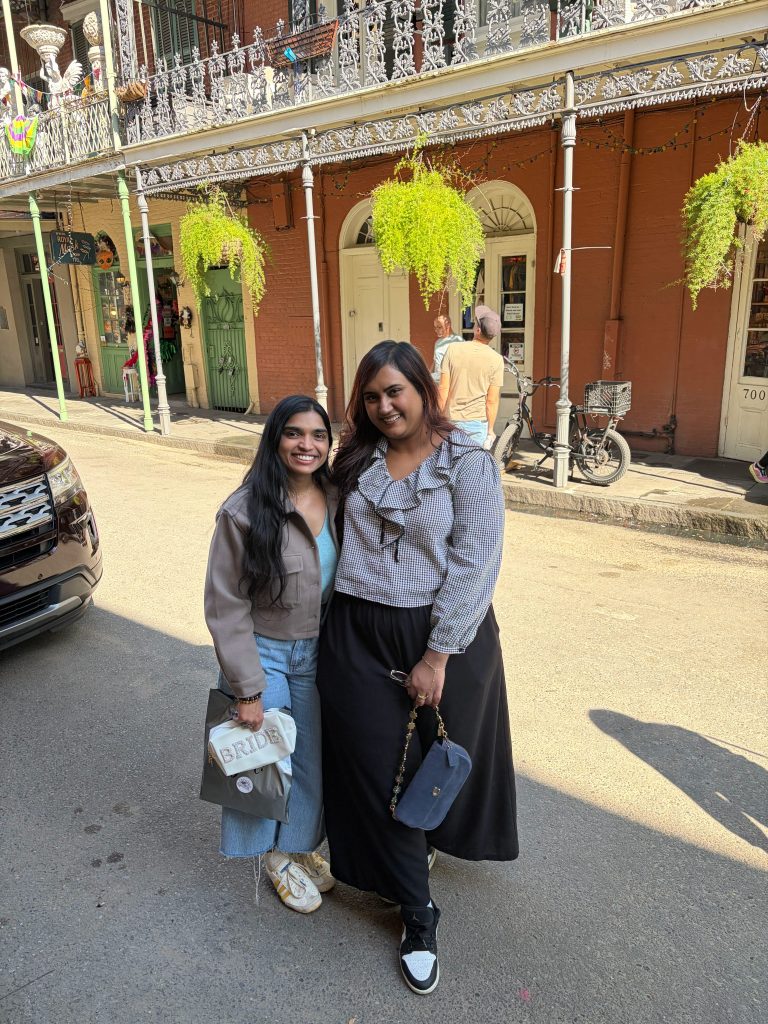
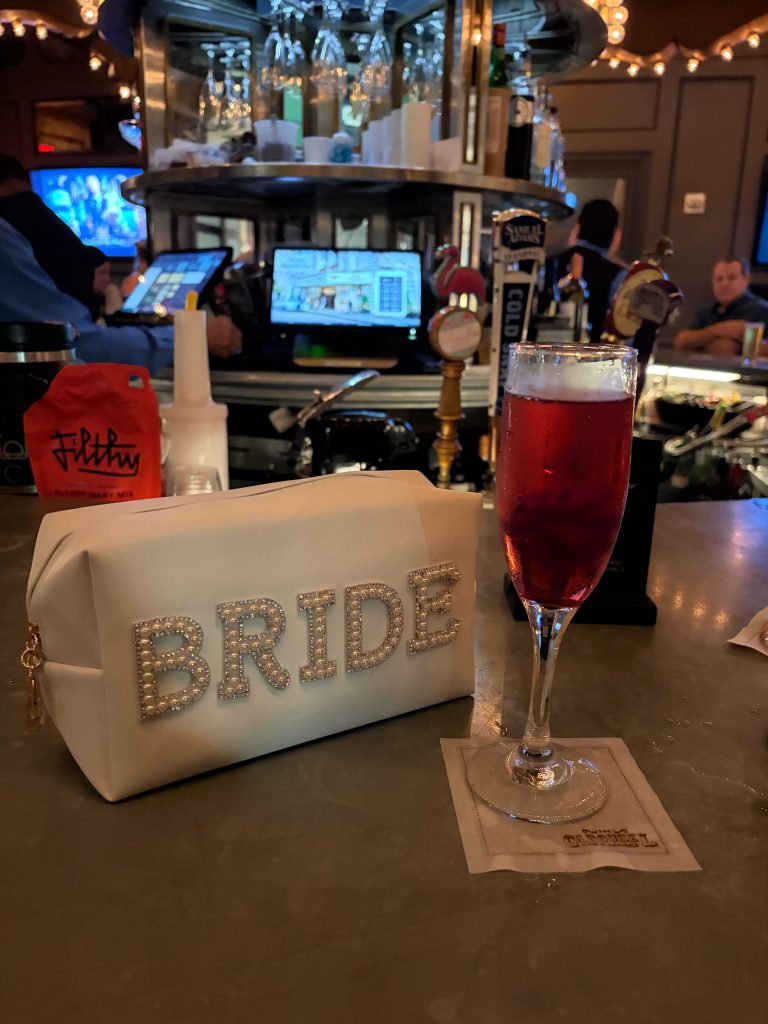
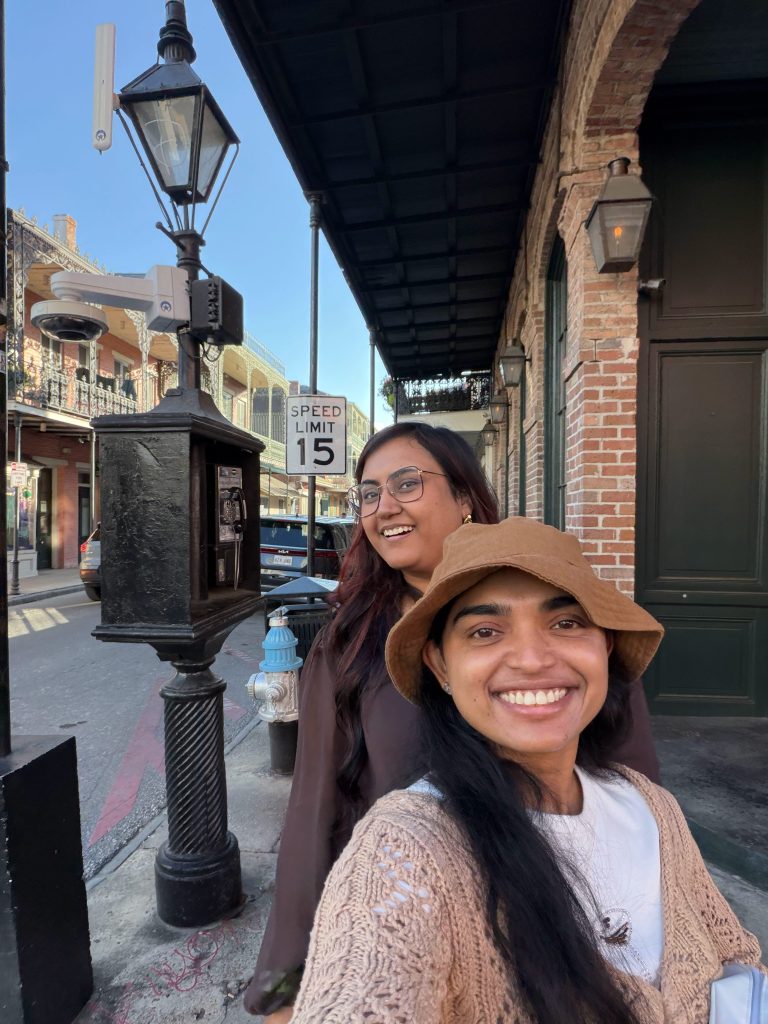
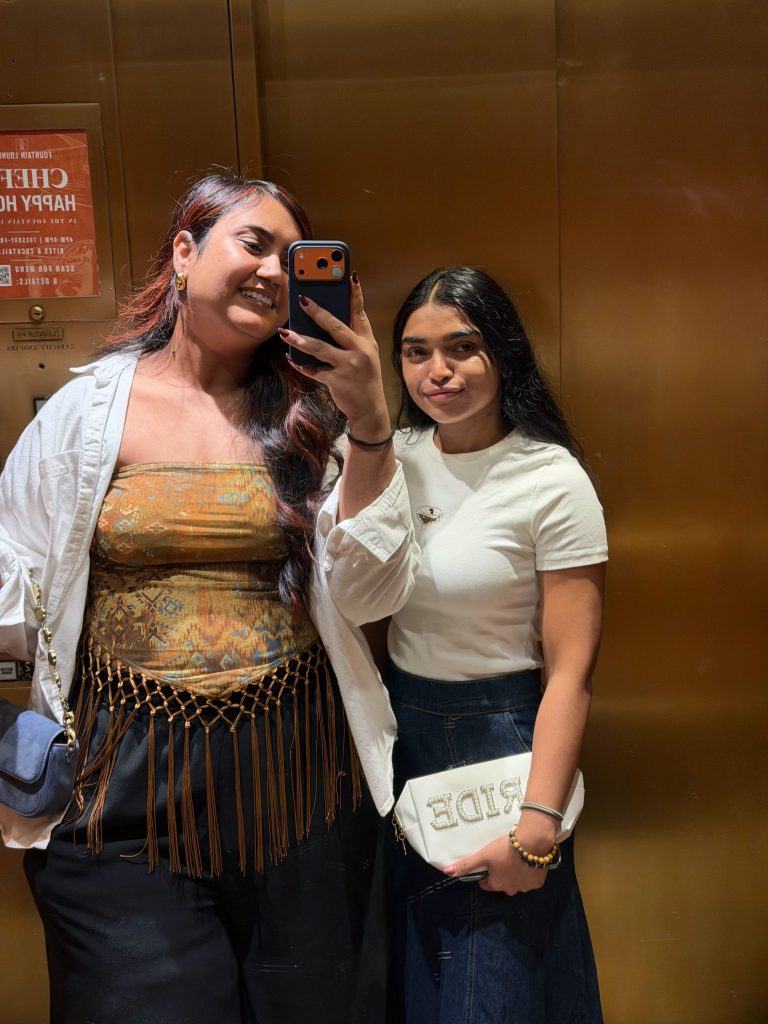
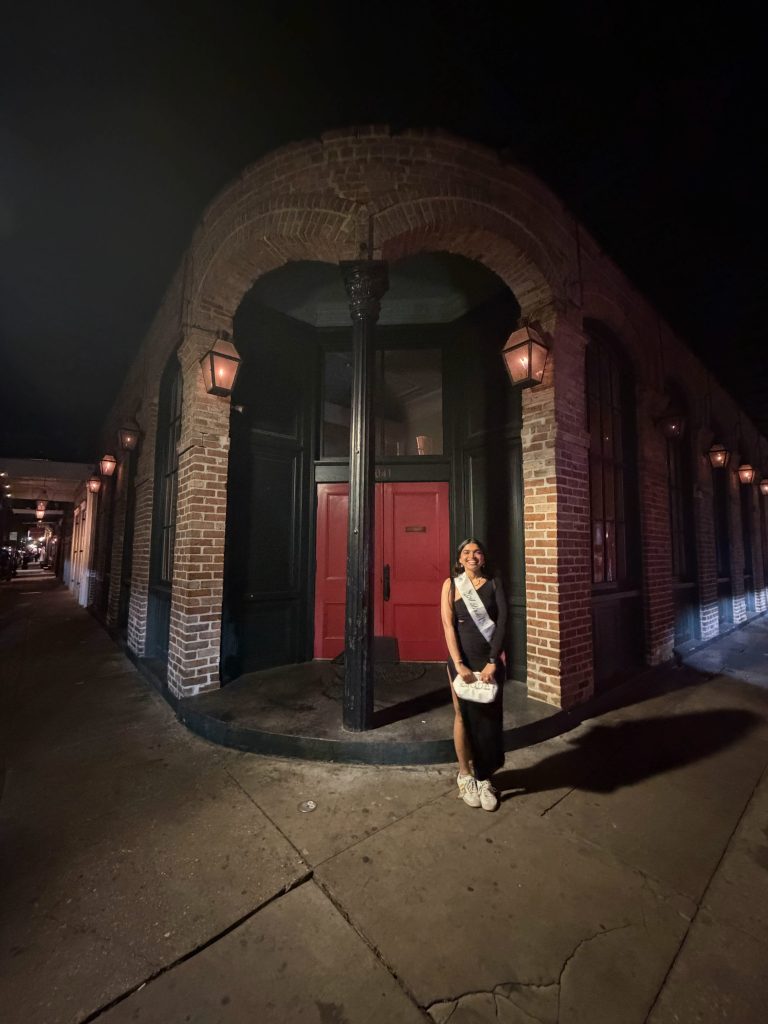
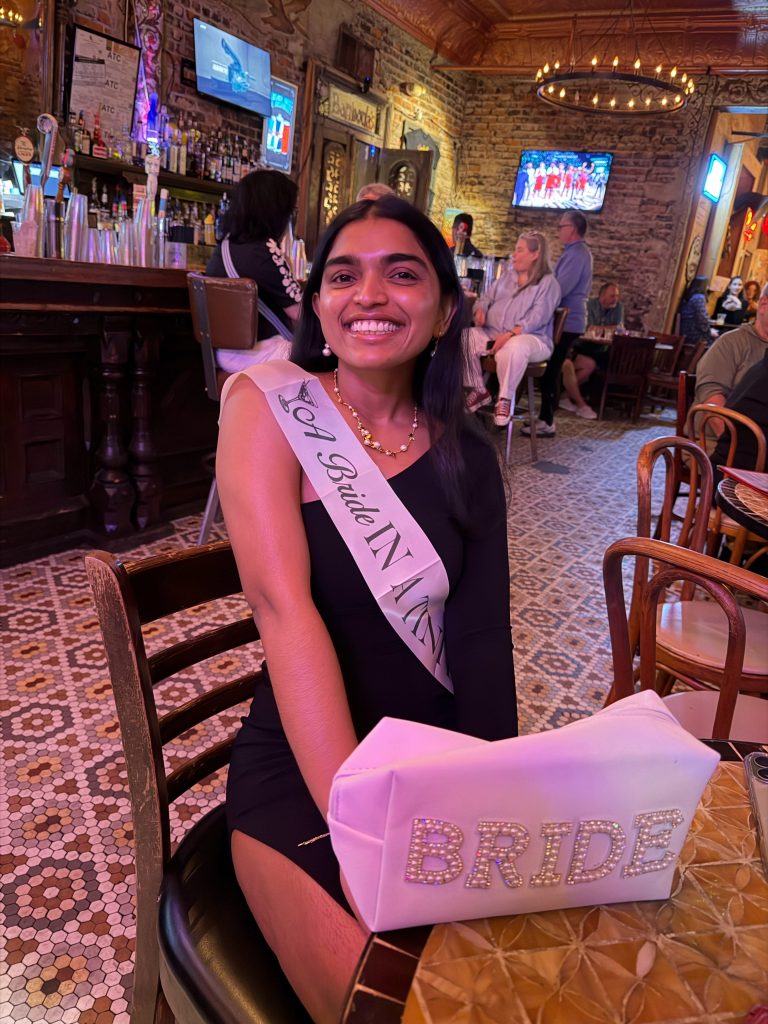
With my “Bride” bag slung over my shoulder, we wandered through the French Quarter, stopping at St. Louis Cathedral where jazz spilled out onto the streets, ducking into little art shops and gift stores along the way. Somewhere in between, we got a tarot reading. Was it overpriced? Absolutely. Would I still do it again? Also absolutely.
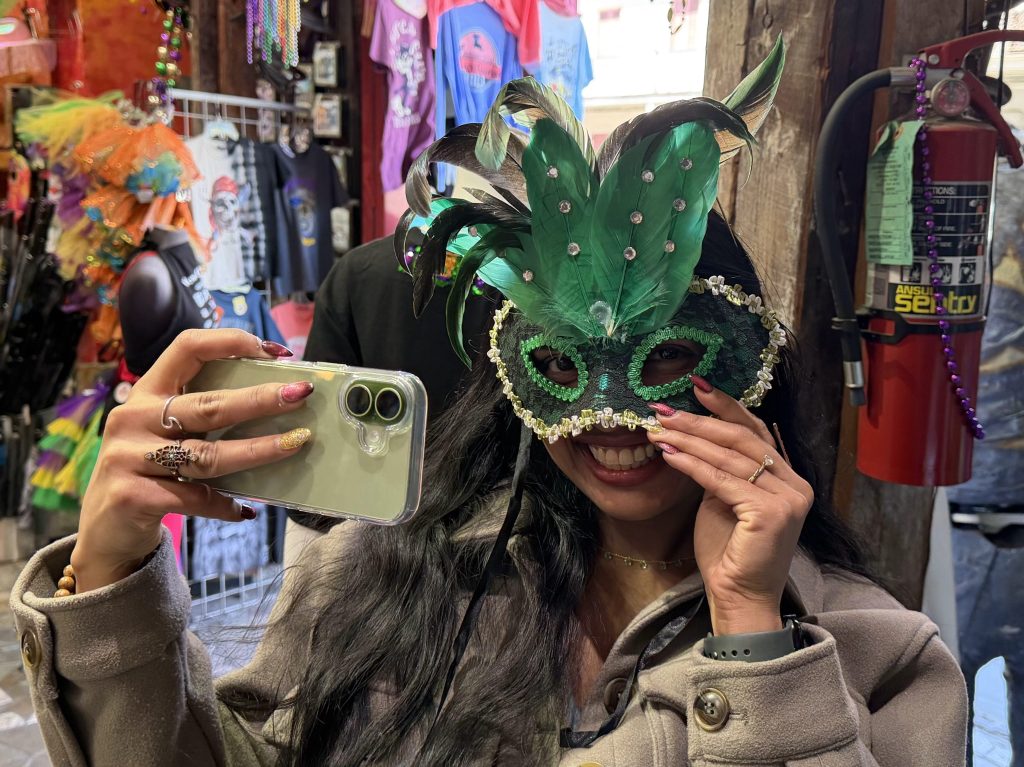
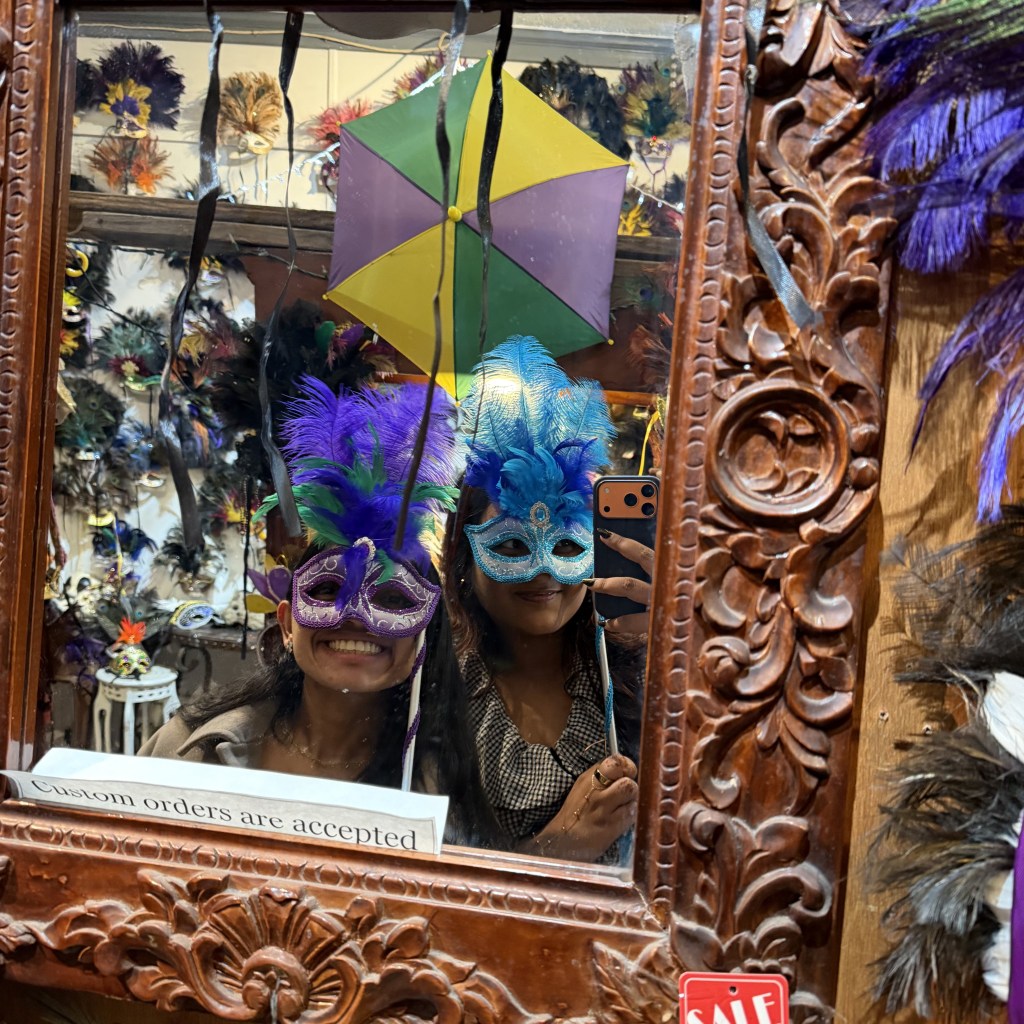
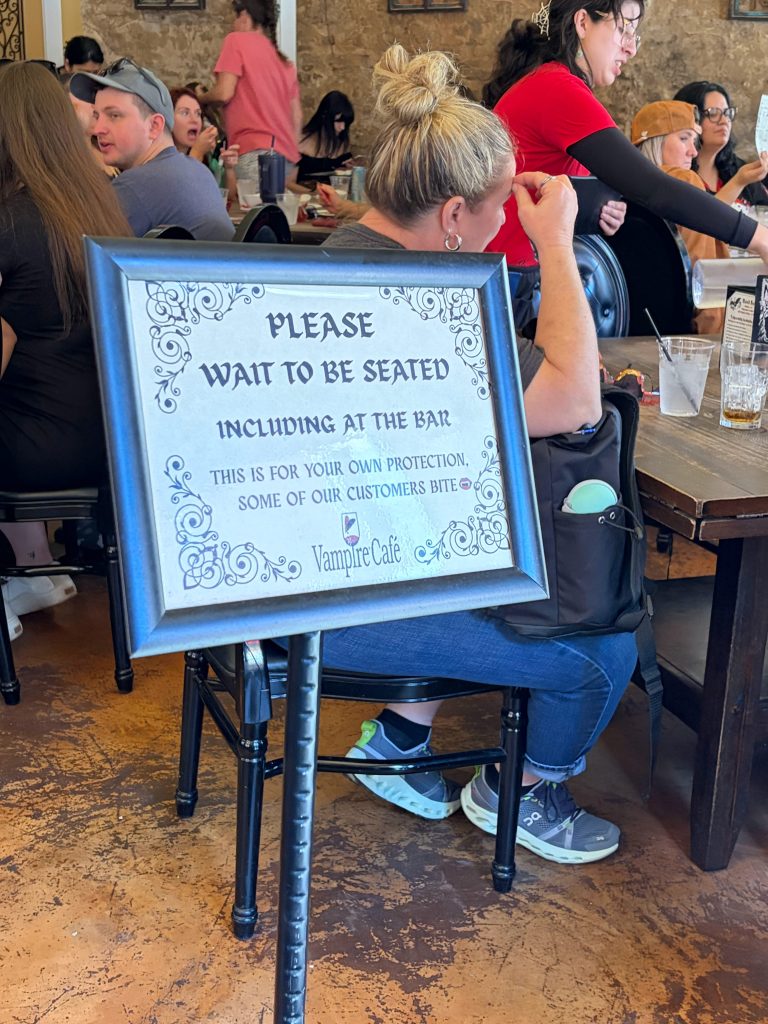
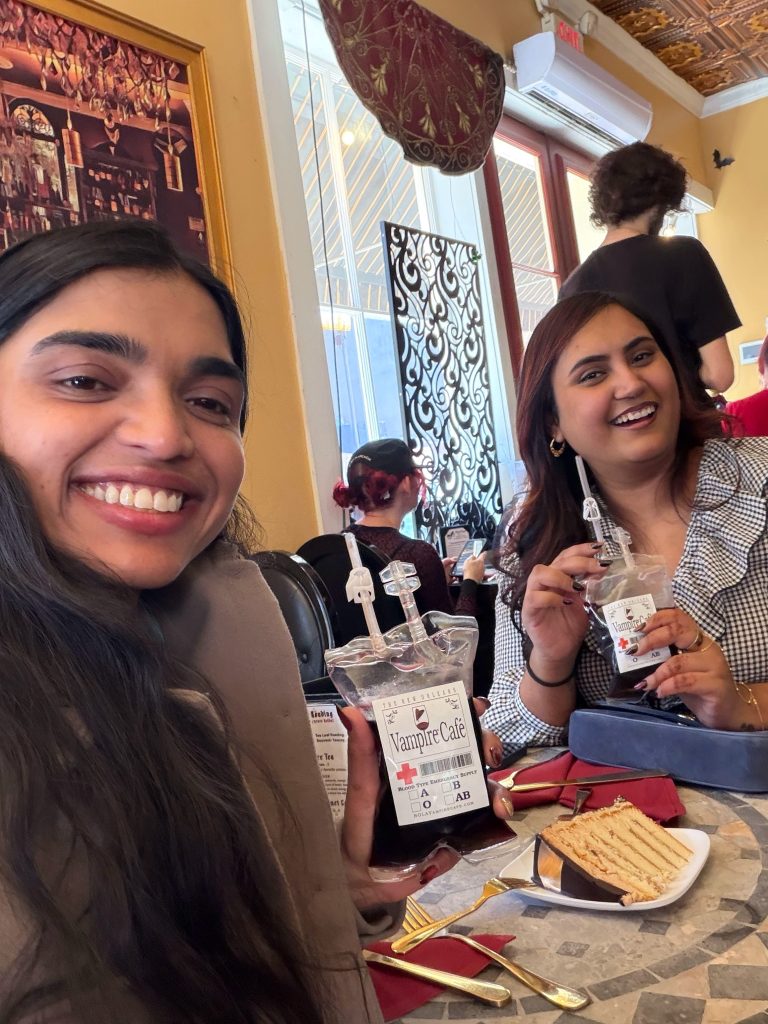
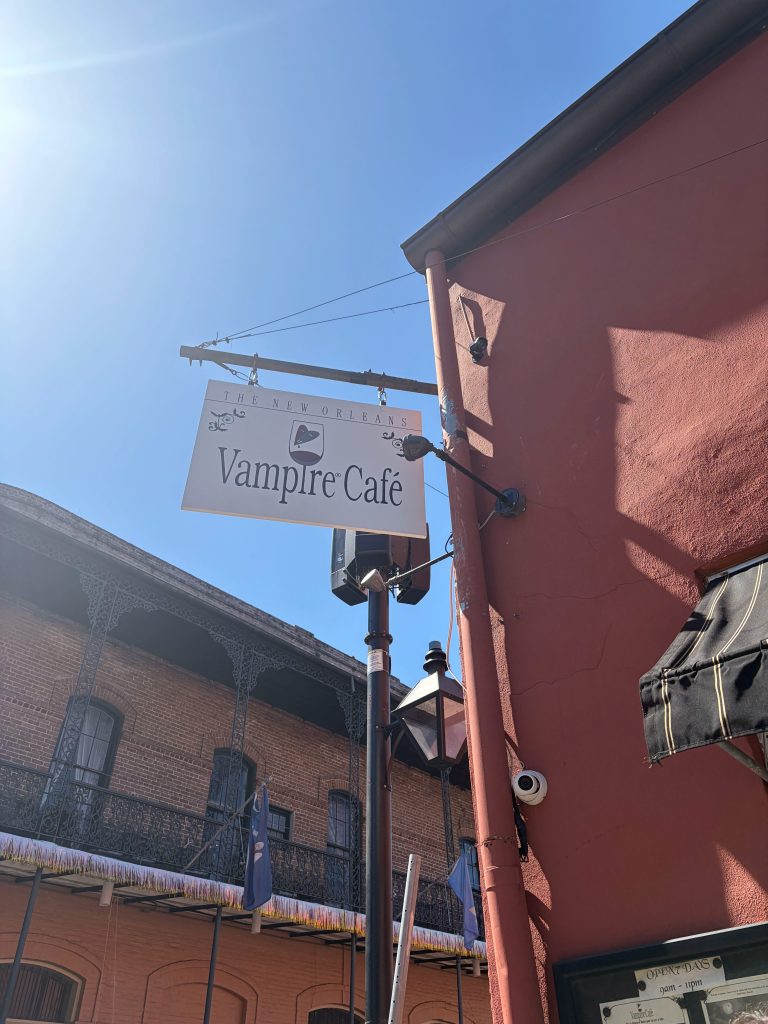
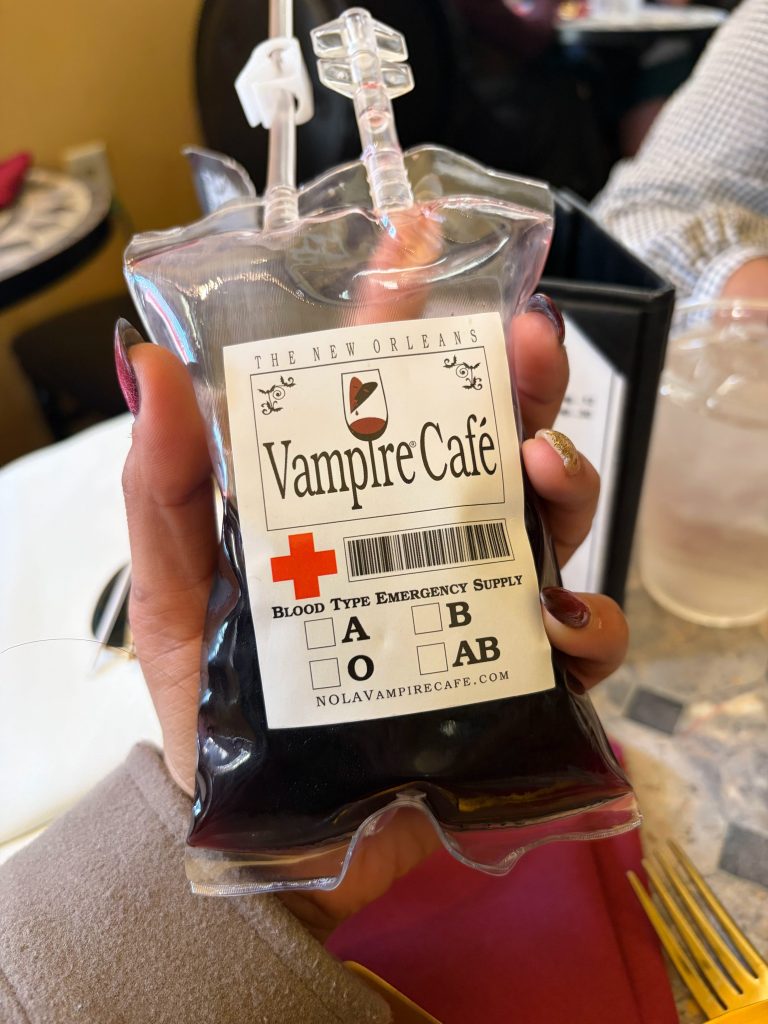
Then came the Vampire Café, where we fully leaned into the city’s commitment to the theme with a sangria served in a blood bag, house fries and a slice of chocolate cake. It was gloriously touristy, and we had the best time.
After a quick outfit change back at the hotel, the evening began.

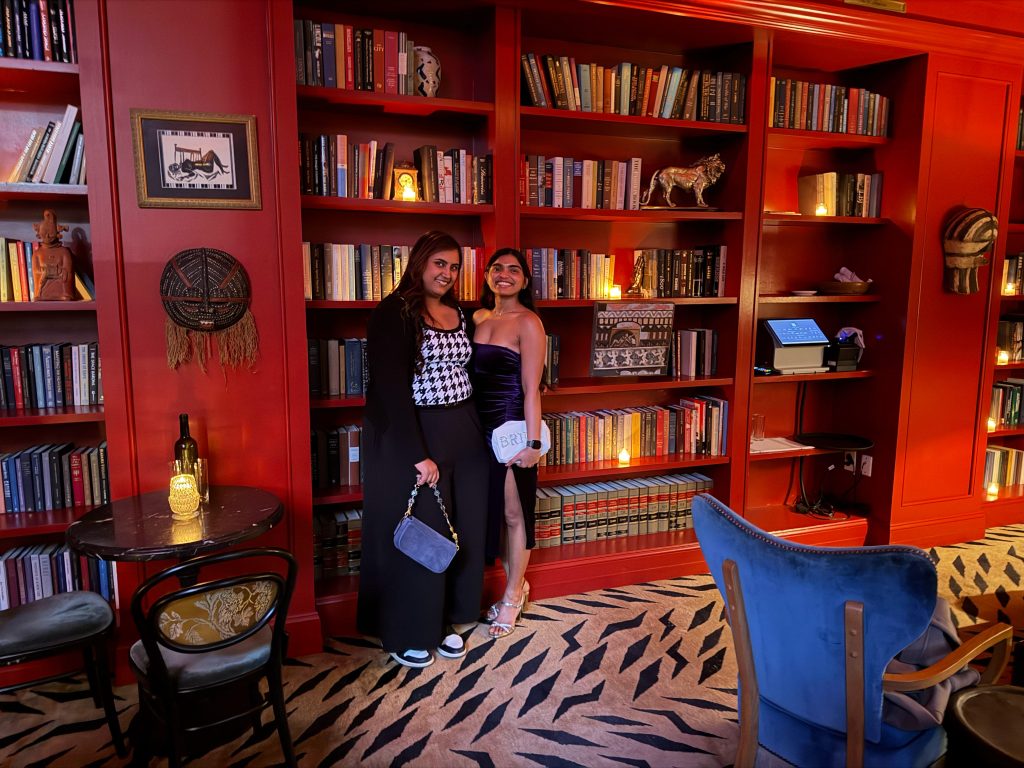
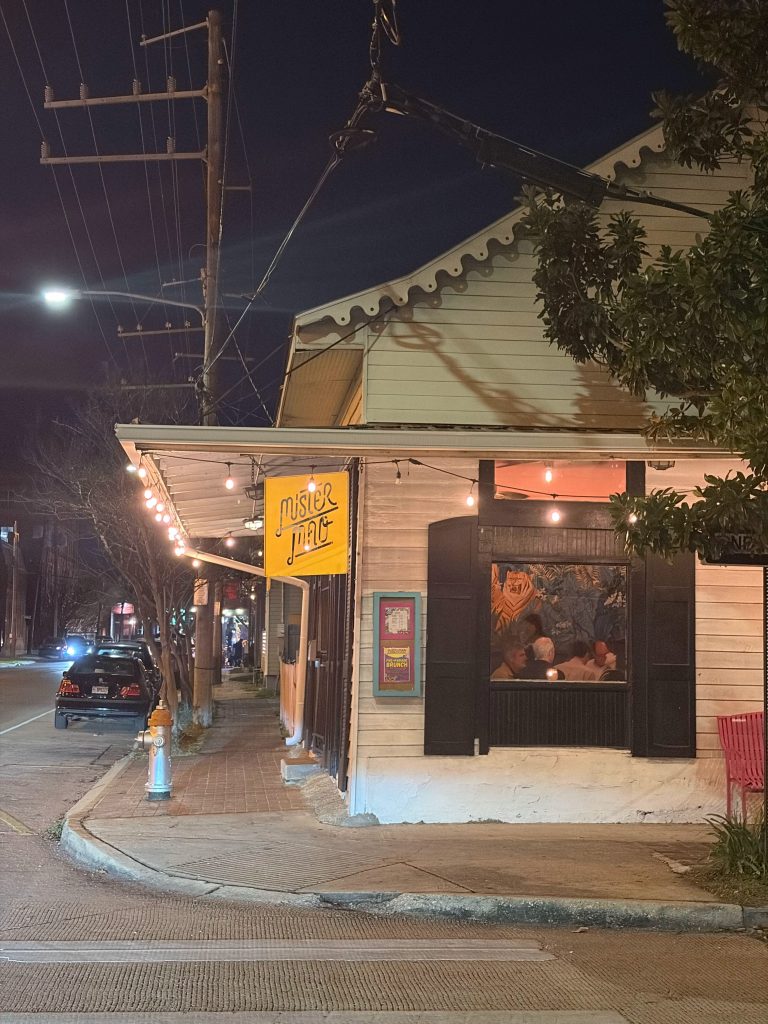
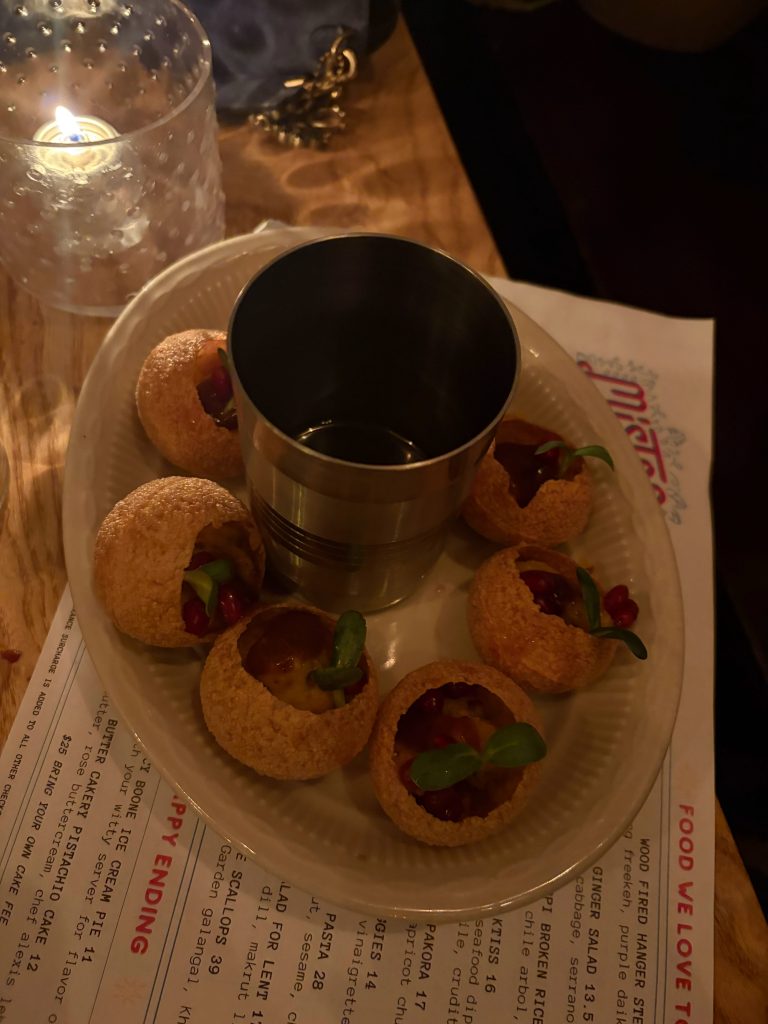
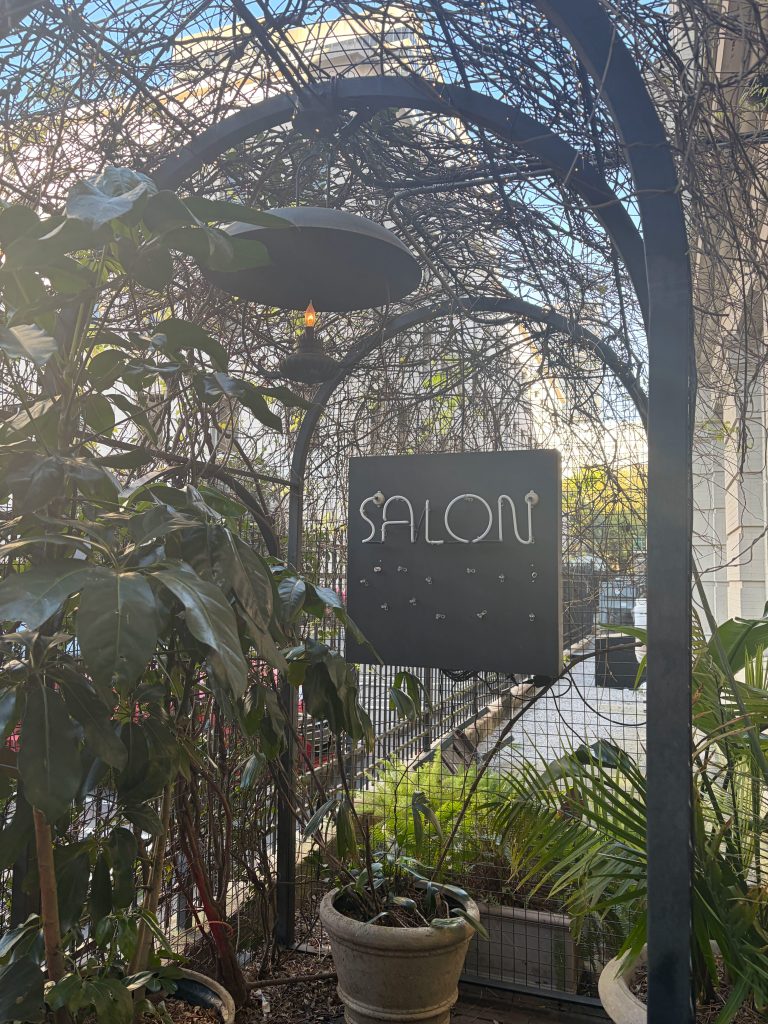
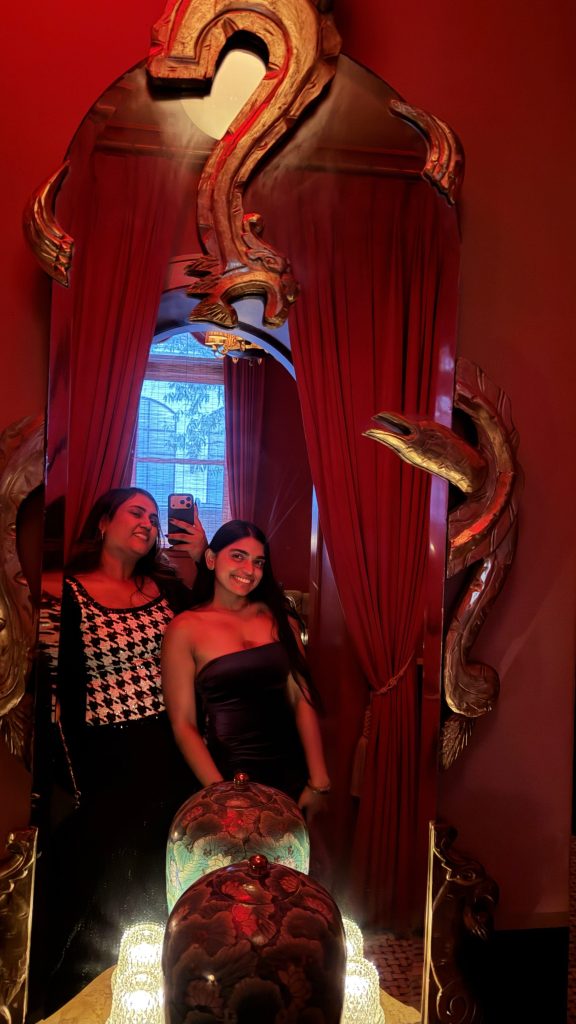
Cocktails and dinner at Salon Salon, where the waitress became part of our camera roll. Then Carousel Bar, where we somehow managed to get seats at the actual rotating carousel and stayed much longer than we’d planned. Dinner at Mister Mao followed, where we somehow found ourselves eating pani puri and Kashmiri chile fried chicken in New Orleans. If you’d asked me to predict that meal before the trip, I don’t think I could have.
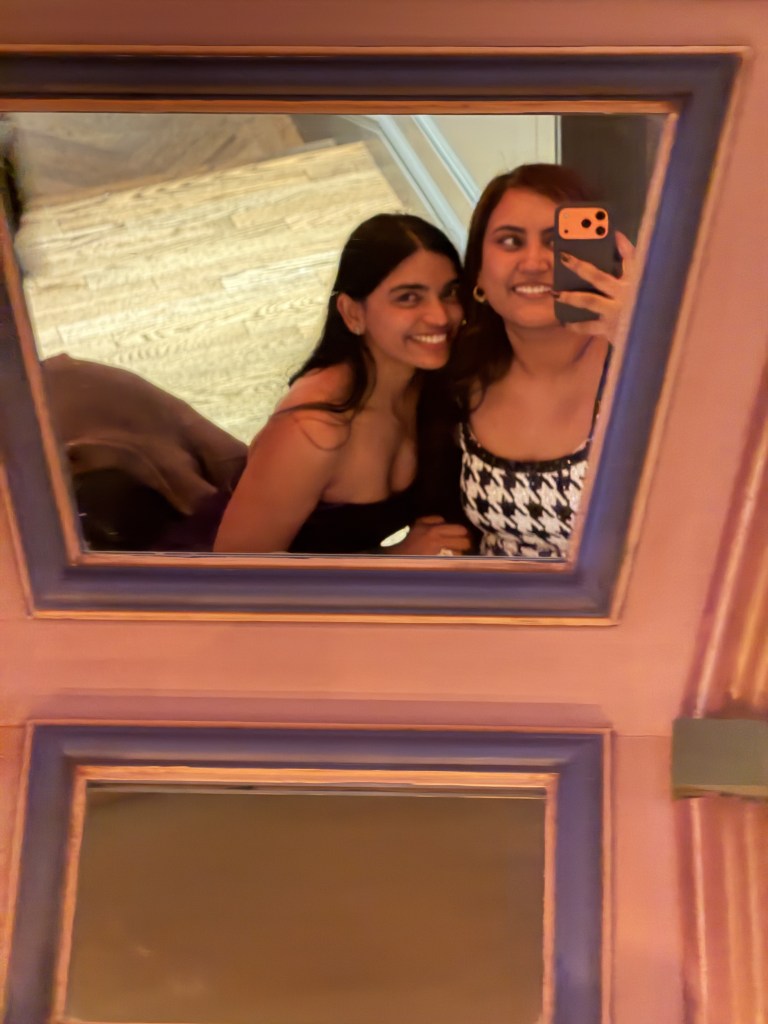
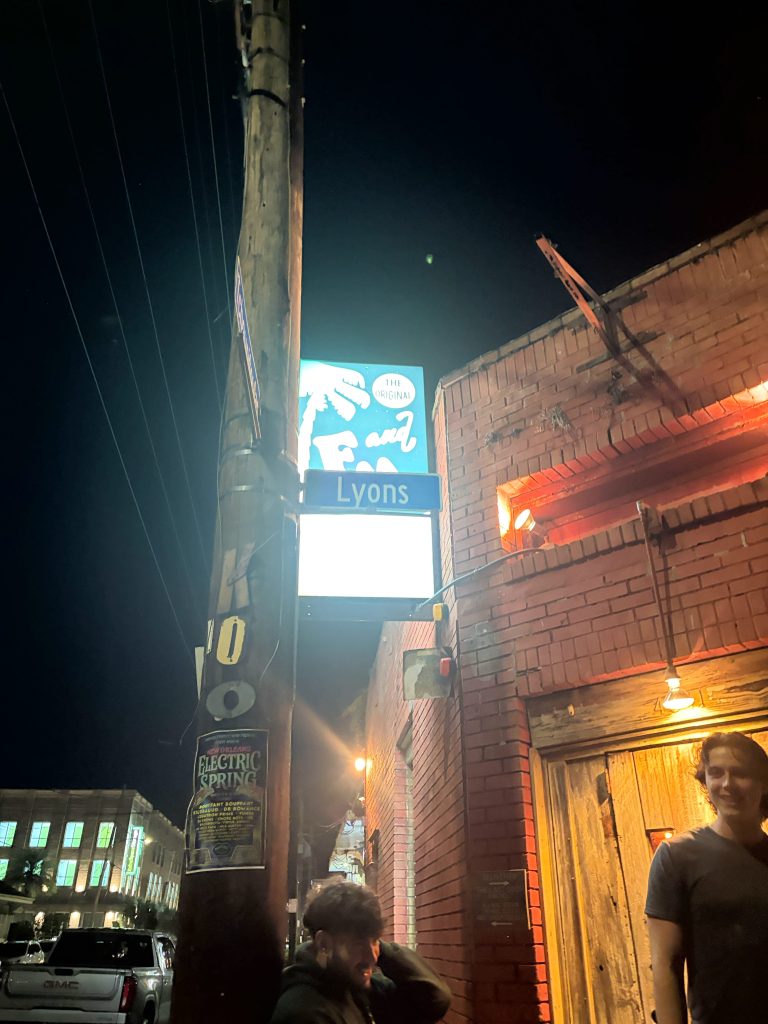
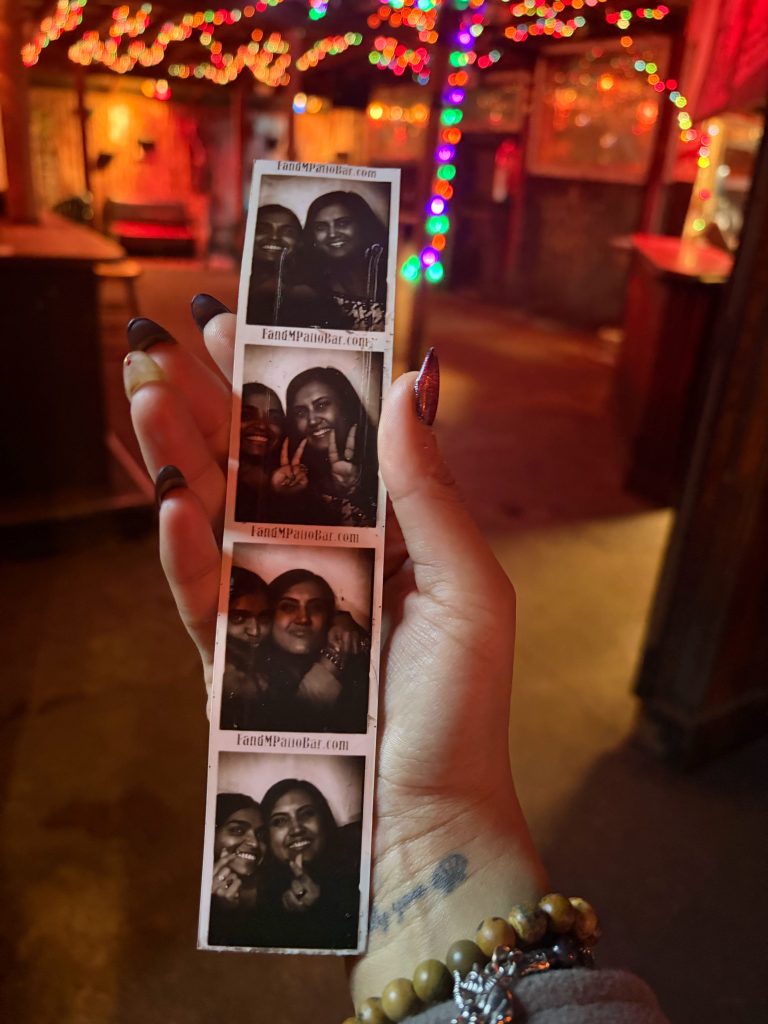
We ended the night squeezed into the tiny black-and-white photo booth at F&M Patio Bar. Those little photo strips might be one of my favourite souvenirs from the weekend.
The next morning started a little slower.

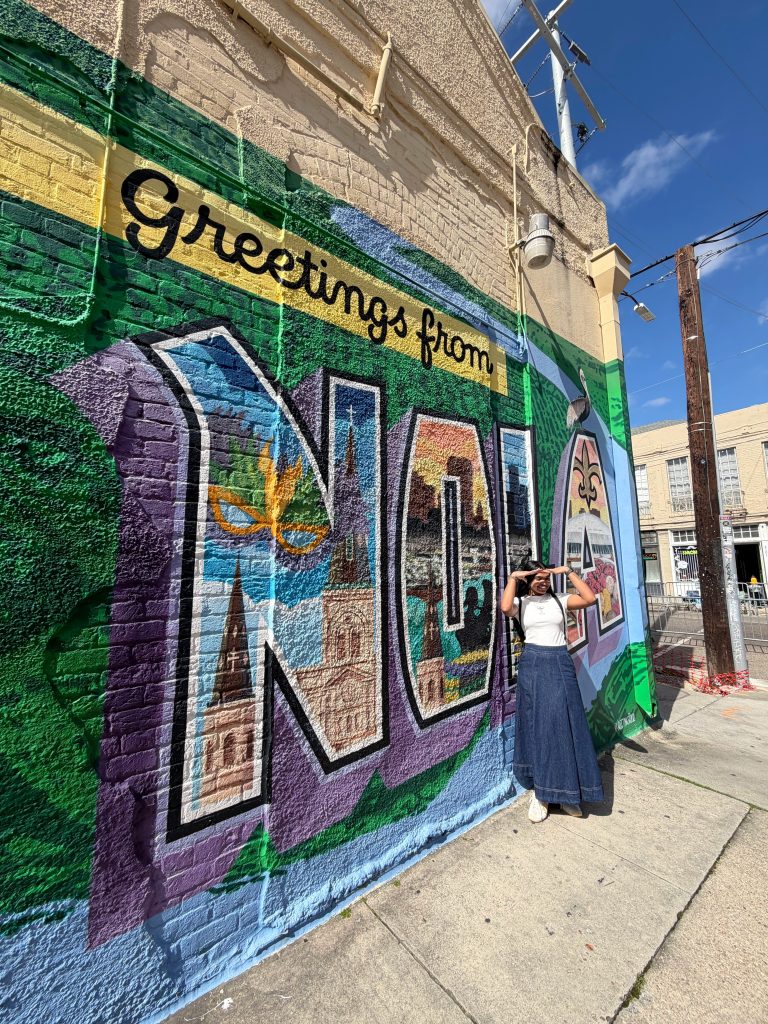
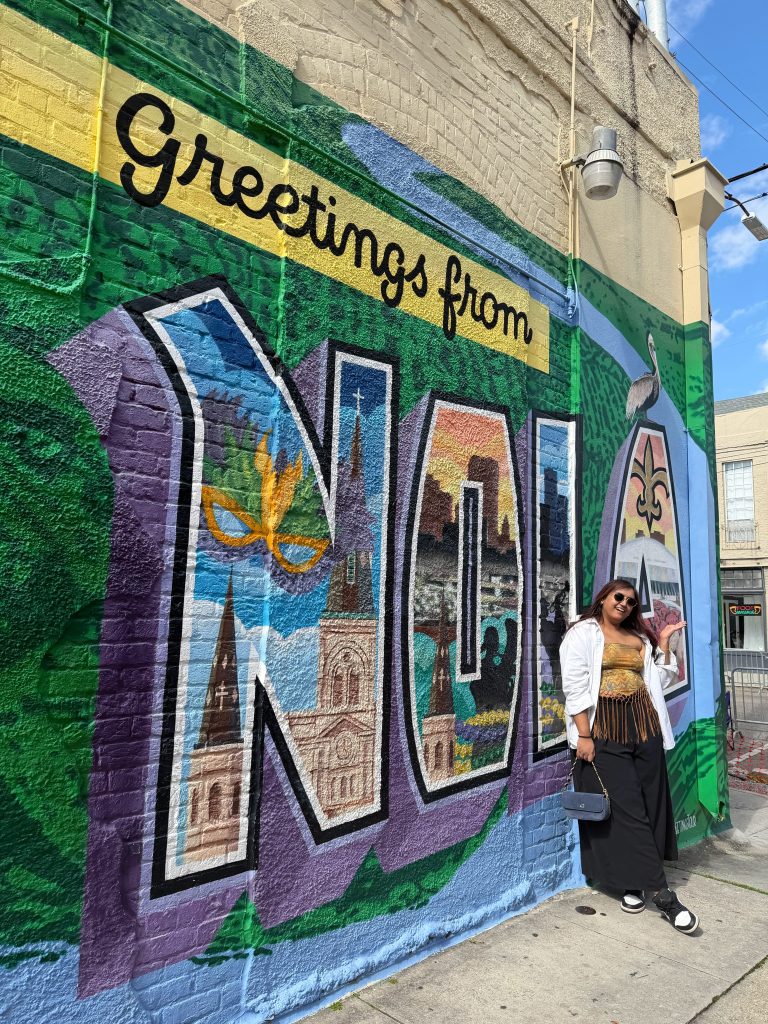
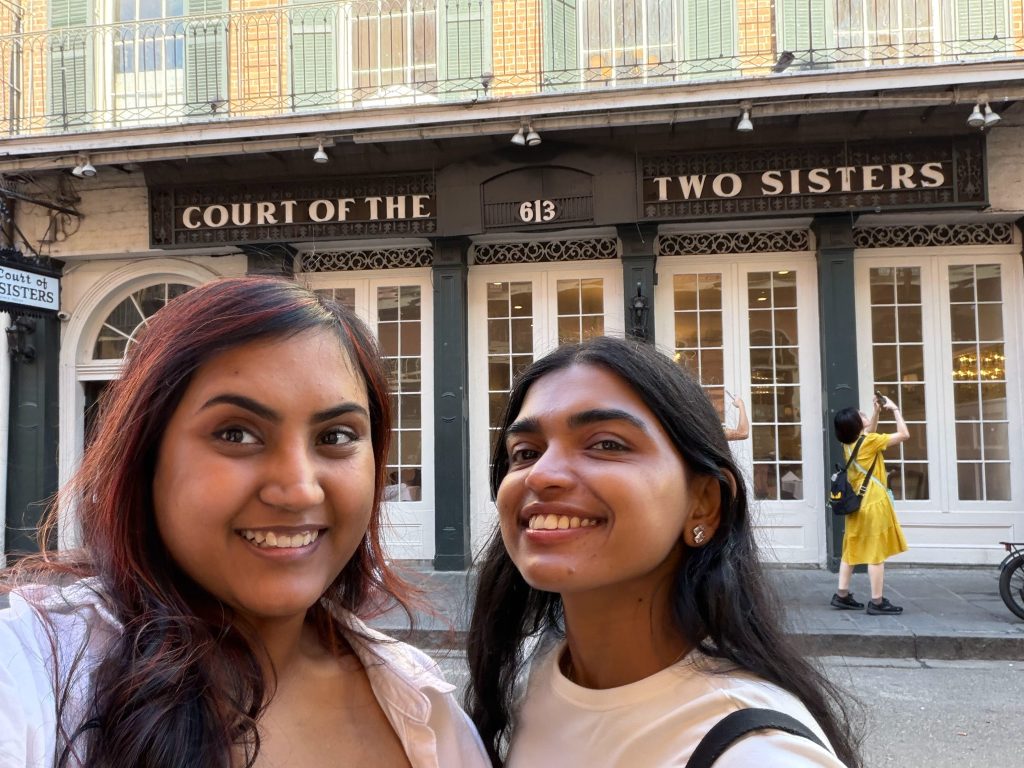
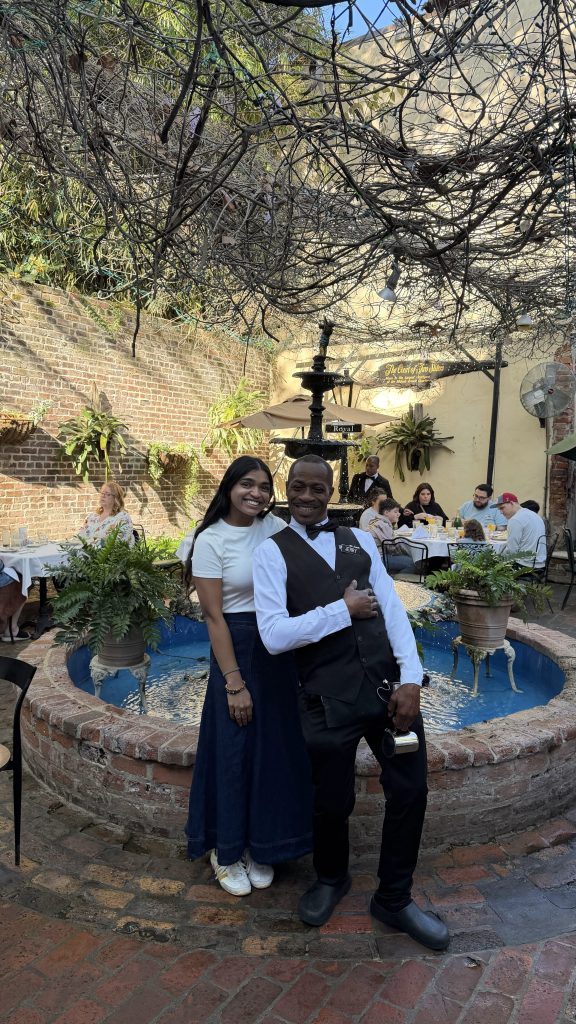
We made our way to Court of Two Sisters for breakfast, where we finally got to try some proper Cajun and Creole dishes before wandering over to PJ’s for coffee and the “Greetings from New Orleans” mural. The city was already getting ready for St. Patrick’s weekend, and there was a buzz in the air that made even an ordinary walk feel like something was about to happen.
Then we did something I almost never do on holiday.

We went back to the hotel.

I got myself a matcha, curled up with my book, and read for an hour while the afternoon drifted by. There wasn’t a checklist waiting for us or a rush to squeeze in one more attraction. Somehow, slowing down became part of the trip too.

That evening was probably my favourite.

We started with the Spirits and Spells tour, wandering through stories of witches, vampires and ghosts while stopping at filming locations from American Horror Story: Coven and The Originals. After a quick dinner at Bamboula’s, we headed off on a true crime bar crawl that ended up being just the two of us and our guide.

It felt less like a tour and more like listening to someone tell stories they’d lived through. Between her work with murder victims and her time living in one of the city’s haunted murder houses, every stop came with another story that somehow made New Orleans feel even more mysterious.
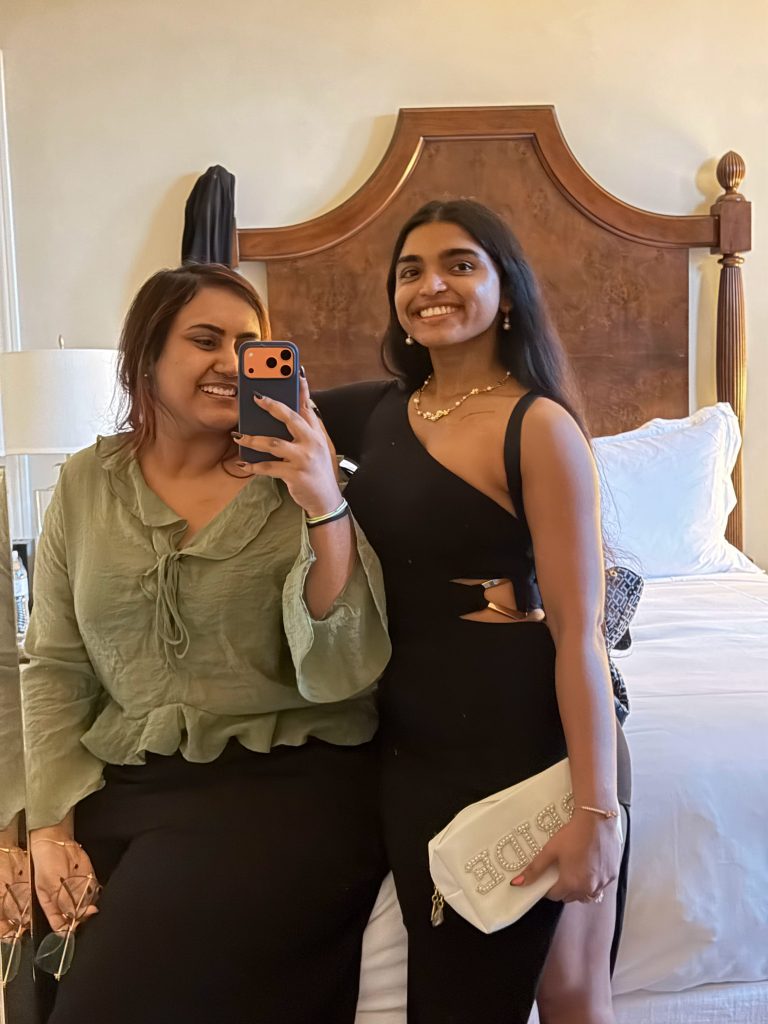
We had every intention of partying until sunrise.

Instead, we spent our last drink talking to strangers before going home and promptly falling asleep.

On our final morning, we wandered through markets, ate what were easily the best beignets of the trip at Loretta’s, and then made what was probably the quickest major decision either of us has ever made.

Matching tattoos!!!
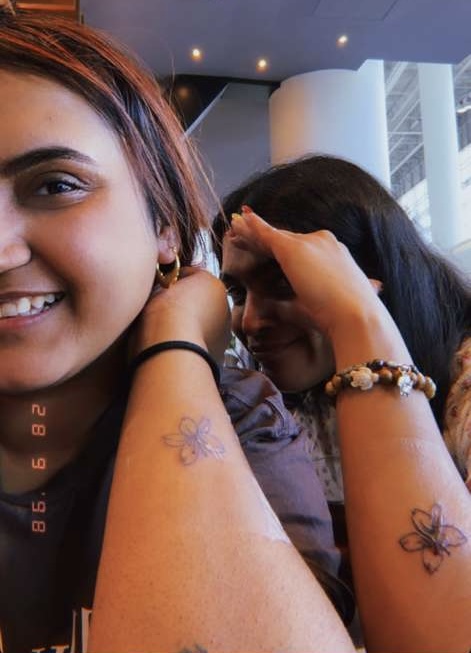
A few minutes later, we walked out with matching tattoos to remember our friendship, our first girls’ trip together, and a little piece of New Orleans we’d get to keep forever. We got lillies to signify NOLA!!!

Before heading to the airport, we squeezed in one last meal: espresso martinis and shrimp po’boys at Ye Olde College Inn. I finished the book I’d been carrying around all weekend, and somehow that felt like the perfect way to close the trip.

People always ask whether New Orleans lives up to the hype.

I think it depends on how you experience it.

Talk to strangers.

Say yes to the tourist trap.

Order the thing that makes absolutely no sense.

Leave room in your itinerary to wander.

If you’re lucky, New Orleans will do the rest.

As someone whose sample size for bachelorette trips is exactly one (and will very happily stay that way), I can say with complete confidence—

This was the best bachelorette trip ever planned!!! And I am the luckiest friend in the world!! Love you, Juhi Shahani aka best roommate/best friend in the whole entire world.
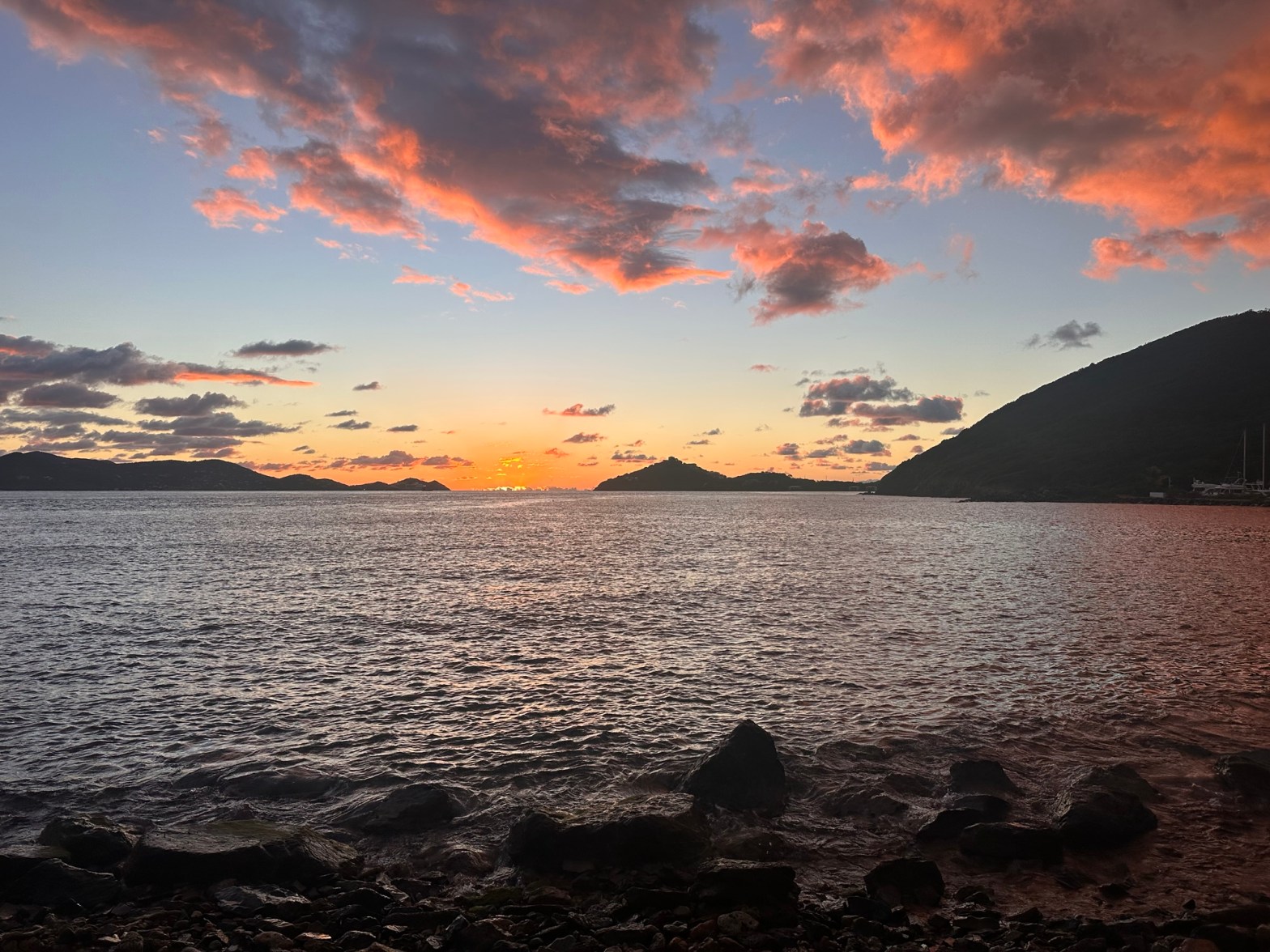
Resting without guilt: Finding tranquility and self-trust in St. John, USVI

Somewhere along the way, time stopped feeling like something I moved through and started feeling like something I carried. Years folded into each other quietly, without ceremony. Responsibilities accumulated. Wins went uncelebrated. Rest was postponed, again and again, for a version of the future where I might finally feel deserving of it.

I think this is an oldest daughter thing. Learning early how to hold weight. Learning how to be dependable before learning how to be kind to myself. Living with the unspoken belief that if I stop, even briefly, everything might slip. That rest is a risk I cannot afford. That achievement is a requirement, not a choice. That love must be earned through effort and vigilance and doing more than asked or required.

So when I decided to take myself to the USVI, it wasn’t to escape my life. It was to interrupt a pattern. I went looking for tranquility and solace, yes, but more than that, I went to see what would happen if I stopped negotiating my right to rest.

St. John felt like home to my nervous system almost immediately. Not in a dramatic way. But in a quieter one. The kind of home that doesn’t demand proof or productivity. The island met me with fullness: the color of the water changing with the light, trees that seemed unhurried, animals moving through the world without apology. Nothing there asked me to perform.

Some mornings, I woke up early to watch the sunrise from my Airbnb. No plans, no urgency. Just light arriving when it was ready, filling the world slowly.

Some days were shaped by a simple quest: finding a turtle. And when I finally did, something in me went completely still. I floated above it, suspended in the Atlantic waters, and for once, my mind did not rush ahead or pull me backward. I didn’t want to leave. I didn’t want to name the moment or make it useful. I stayed there longer than I meant to, my body completely still.

I have lived in a thousand moments at once for as long as I can remember. Anticipating, planning, compensating. Carrying what has been and what might be and what could go wrong if I stop paying attention. On St. John, something softened. The thousand moments loosened their grip, if only briefly, and I learned what it felt like to live inside just one.

There is something humbling about the ocean. It doesn’t rush. It doesn’t explain itself. It doesn’t apologize for taking up space. It moves with its own timing, and in doing so, gives permission to exist. Stillness found me without force: in floating without effort, in watching waves repeat themselves endlessly, in letting color and motion be enough.

What surprised me most was not the peace, but how quickly my body recognized it. How natural it felt once I stopped resisting it. The constant internal urgency quieted. The fear that rest might make me less capable or less worthy faded. I realized how long I had been equating pressure with care, effort with love.

And somewhere between the water and the mornings, a gentler realization settled in. I hadn’t been cruel to myself. I hadn’t been withholding love. I had been loving myself the only way I knew how: through responsibility, through vigilance, through doing what needed to be done.

A way of honoring the past without excusing the cost of it. A way of understanding that my ambition, my endurance, my refusal to rest did not come from self-loathing, but from a belief that this was how worth was maintained.

This trip gave me more than memories. It gave me evidence. Evidence that peace is not a luxury. Evidence that I can plan a life, pay for it, drive myself through it, without needing to be relentless. Evidence that independence does not require self-denial. That rest does not undo ambition. That I can carry responsibility without letting it consume me.

The islands did not fix my life. They did not erase the weight I carry. But they showed me that I can carry it differently. With less clenchedness. With more presence. With more color.

And when I think about who I am now, returning from that stillness back into motion, I know this to be true:

Not broken by what I have carried. Not diminished by choosing rest. But sharpened. Claimed. Fully my own.


P.S. Logistics and travel notes can be found here <LINK COMING SOON>. This essay was written by me and edited for clarity and flow with AI assistance.


Happiness – Annu’s version

I thought I knew what happiness meant.
Until last week, when I decided to take an actual break.

Not the kind where I tell myself I’m taking a break but end up doing things anyway.
But a real one — where I just exist.

I’m grateful I could do that, because it reminded me what the happy me sounds like, and what she feels like.

I read books, telling myself just one more chapter.
I listened to music — something I’ve only used as background noise for I don’t know how long.
And I started breaking into song, sometimes even dance, at the slightest hint of a lyric or a rhyme.

“Nahi hoga” became kaati raat maine kheton mein, tu aayi nayi.

“Can you turn on the light?” became
Flashing lights, I ain’t got a worry on my mind,
Know that you’re mad, I realized,
That I don’t need ya, I don’t need ya.

(“Confetti” by Little Mix)

“Be careful” became
Something ‘bout you makes me feel like a dangerous woman.

“It tastes really nice” became
Super Machi

Among many others.

When I practiced my Kuchipudi routine, I felt alive — like I never have before.

My smile feels different.
My skin feels different.
My heart feels different.

It’s nice to be reminded of what happiness actually feels like.
And I will hold on to it for dear life.


Fragments, 25 September 2025

I am scared that life is slipping.
I am caught between my own ambitions and my parents’ expectations.
I have not read a book in two months.
I have not slept without an alarm in years.
Despite the alarm, I wake from nightmares of not doing enough.
I am always either anxious or burnt out.
Burnout feels safer than anxiety.
At least then my heart rests.
I regret being an ‘overachiever’.
It feels like a weight I cannot drop.
I wonder if I can keep this up.
People tell me I will rest someday.
I do not believe them.
I fear that despite proving myself every day, I will have to fight until my last breath to show my birthgivers I am enough.
I hate fighting them so they will not undersell me to “prospective future husbands.”
I hate that not having a Y chromosome makes me somehow less in their eyes.
They do not say it.
Their actions speak it anyway.
I feel close to crumbling.
I fear it is only a matter of time.

The Arranged Marriage Connundrum – Why Was I Always Asked to Be Better, but He’s Good Enough for Simply Existing?

On the double standards in raising daughters vs marrying them off

TW: Suicidal ideation, anxiety, coercion


Where do I begin?

I am a 28-year-old “older” daughter with MBBS and MPH degrees, and a full-time job in a field I absolutely love and feel deeply passionate about. I’m preparing for my USMLE steps while juggling a full-time job, my health, meals (often meal-prepping), cleaning, doctor and dentist appointments when needed, and workouts. I’m fully financially independent and actively paying off my student loan.

I love dancing, and every Thursday, I take formal Kuchipudi classes — I also practice on other days because I take it seriously. I used to read a lot more, but due to time constraints, I now read or listen to books and review them much less than I’d like, but I still do. I also enjoy exploring new restaurants and staying in touch with family and friends.

Do I love keeping busy? Sure.
But as someone in therapy for anxiety, and a lot of introspection behind me, I know that I do so much of it just to be worthy of my parents’ love. I often feel like a disappointment, because I’ve been made to feel that way — even though my parents say they’re proud of me, I know they’re not satisfied.

I’ve always been pushed to work harder and do better.

  • I got a 9.5/10 GPA in my 10th SSC (state board, Andhra Pradesh).
  • I ranked #2 in the state during my 11th boards.
  • I lost my grandfather in January 2014 — he was my whole world.
  • I didn’t receive the emotional or mental support I needed.
  • I gave my 12th boards in March and my medical entrance in May of the same year.
  • I got a combined 96.8% in 11th and 12th (because 12th boards didn’t go as well).
  • I ranked around 1050–1060 in the entrance (don’t remember exactly).

Could I have done better? Sure. But I remember hearing my parents telling people I didn’t perform well because I lost my grandfather. While that might be partly true, I couldn’t help wondering — why was an excuse needed? Was my performance that bad?

I got into a government medical school.

In my first year, I got 2 distinctions out of 3 subjects. I missed the overall distinction, which made me sad. But still — 2 out of 3!

My dad wasn’t happy.
I still remember the day he lashed out at me in front of close relatives, saying I’d been a constant disappointment in his life since 10th grade. I was 18.

That was the first time I wanted to kill myself. I thought about how easy it would be to hang from the fan. I laughed bitterly, thinking it might break — our house was old. I didn’t know what to do.

But I survived, never feeling enough, always feeling I had to do more.


In school, I had the opportunity to swim, skate, run (I was the fastest 100m runner in school without training), play hockey, and basketball. Many of my coaches asked me to join classes. But I was never sent. Let’s be honest — I have a lazy dad.

Don’t get me wrong — I absolutely love him to pieces, and I wouldn’t want anyone else in his place. I cannot imagine my life without him. I have felt the immense love he holds for me.

But both things can be true.
He can be the best dad, and also the one who put this unbearable pressure on me.


I’ve seen parents bend over backward to give their kids the best opportunities. I don’t think I got those shots. I was given the bare minimum — which I’m extremely grateful for — but I could’ve done without the outrageous expectations that came with it.

I think I was forced to grow up too soon.

My mom told me in 5th grade that we weren’t financially stable and I should stop asking for things.

In 9th grade, I needed a new uniform — mine was faded, and I was getting punished at school. Instead of asking, I saved up every rupee I’d ever been gifted to buy one myself. Months later, when I was almost successful, my dad finally said, “Oh, let me get it for you.” Not when they saw my faded uniform, but when I’d nearly solved it alone.

In med school, I needed a laptop for PG prep. It took 8 months to get one. I don’t even remember how long it took me to ask. My med school fees were 10,000 rupees a year, by the way. And it’s not that we were poor, I’ve seen money spent in other ways. Also, dad wanted me to clear both Civils and PG entrance while doing my very gruelling internship. 🙃

So basically, I was a financially insecure, underconfident ball of anxiety, hoping someday I’d make my parents proud.


I chose research over clinical practice.
Did I get support? Yes, immense support.
But I had to lie — had to say I was doing this while preparing for my Steps. I knew deep down that was a huge lie.

I won the Academic Excellence Award during my MPH. Did it make them happy? Sure.
But it still wasn’t enough. Why? Because I wasn’t in clinical practice.

I remember hearing:
“How can I tell people that you’re in public health?”


Yes, I’m venting. But only because:

If it was so important to put that much burden on my then little shoulders and still make me feel like I’m not doing enough (while outwardly praising me),
WHY ARE YOU NOT HOLDING MY FUTURE HUSBAND TO THE SAME STANDARDS?

“The family is great!”

“They’re not asking for a dowry!”

“They’re very interested in you!”

All fine. But if I don’t feel it, I don’t feel it.
Can you please not pressure me into marriage?

I’m scared.
As strong as I am in standing against manipulation, I’m scared I might give in — not because I want to, but because I don’t want to keep fighting for you to hear me.
I don’t think I can fight for much longer while doing everything else I’m doing.


A cherry on top?
The nonchalant comment from my parents:
“Oh, it would’ve been nice if you found someone in our caste yourself and saved us the time.”

You know what the problem with that is?
My mom once told me during med school that she would absolutely kill herself if I brought someone home.


Here’s hoping I don’t have to settle for someone who dims my shine.
Here’s hoping I find someone who doesn’t think I’m “too much,” and wants to live life with me.
Here’s hoping I meet someone as passionate as I am — if not more.
Here’s hoping I never have to marry a homophobic, racist, or toxic “macho” man.
Because honestly, I would rather die than call such a man my husband.

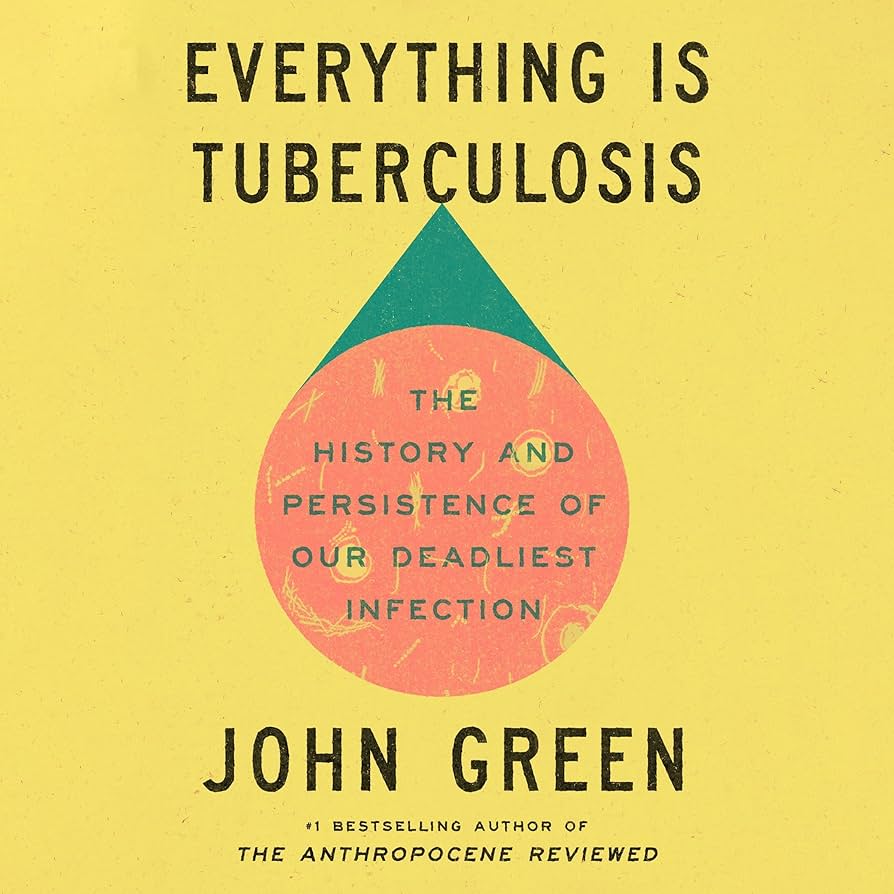
📚 Book Review: Everything is Tuberculosis by John Green — A Curable Disease, a Deadly Injustice 🦠💔✨

I’ve been reviewing books on this blog for a while now, but Everything is Tuberculosis wasn’t just another title on my list.

Tuberculosis research has quietly become the heartbeat of my work. It’s not just what I study, it’s how I see the world. A lens that colors my understanding of justice, equity, and health. I could not not read this book.

I’m a physician by training.
I stepped away from clinical practice to pursue research and public health, a decision that some of my family and friends still don’t fully understand. In many of the circles I belong to, becoming a doctor is the goal. Anything else? It raises questions. Quiet ones. Loud ones. And a lot of inner conflict.

This book gave me language for what I’ve felt for years.

📖 Goodreads Blurb

John Green, the #1 bestselling author of The Anthropocene Reviewed and a passionate advocate for global healthcare reform, tells a deeply human story illuminating the fight against the world’s deadliest disease.

Tuberculosis has been entwined with humanity for millennia. Once romanticized as a malady of poets, today tuberculosis is a disease of poverty that walks the trails of injustice and inequity we blazed for it.

In 2019, John Green met Henry, a young tuberculosis patient at Lakka Government Hospital in Sierra Leone while traveling with Partners in Health. John became fast friends with Henry, a boy with spindly legs and a big, goofy smile. In the years since that first visit to Lakka, Green has become a vocal and dynamic advocate for increased access to treatment and wider awareness of the healthcare inequities that allow this curable, treatable infectious disease to also be the deadliest, killing 1.5 million people every year.

In Everything is Tuberculosis, John tells Henry’s story, woven through with the scientific and social histories of how tuberculosis has shaped our world and how our choices will shape the future of tuberculosis.


🧬 Genre

Non-fiction, Global Health, Narrative Medicine, Medical Humanities


⚠️ Trigger Warnings

🩸 Illness and death
🧍‍♂️ Healthcare injustice
💔 Systemic neglect
👶 Pediatric illness
🇸🇱 Global health inequity


📚 A Book About TB… But Also About Us

John Green set out to write about tuberculosis.
But what he ended up writing is much more than a medical narrative; it’s a call for empathy, a spotlight on injustice, and a deeply human story.

“The cure is where the disease is not, and the disease is where the cure is not.”

TB is curable. It has been since the 1950s.
So why are we still losing 1.5 million people a year to it?

“How can I accept a world where over a million people will die this year for want of a cure that has existed for nearly a century?”

💡 When you’re surrounded by like-minded people, it’s easy to become a frog in a well. It might be the best well in the world, but it’s still a well.

This book reminded me that empathy isn’t a given. We have to keep choosing it. Over and over again.

As Green puts it:

“Why should we move mountains to save a patient? Because he is ONE PERSON.”


👦 Henry and the Power of One

The data is overwhelming. The numbers are devastating.
But Green doesn’t throw charts at you. He gives you Henry.

“The problem with statistics is I cannot take in that we lose one million two hundred and fifty thousand people each year to a curable illness… but I can just barely fathom Henry.”

He invites you to imagine yourself in his shoes. To remember all you’ve lived through, all who have loved you into being. And then, only then, to multiply that by 1.25 million: people, lives, families.

That’s when the number starts to feel real.
That’s when the urgency stops being theoretical.

TB is still here. Still unjust.
And the reason isn’t science. It’s systems.

“The real cause of contemporary tuberculosis is, for lack of a better term, us.”


📊 Rating Table

CategoryRating
✍️ Writing⭐⭐⭐⭐⭐
🌍 Setting⭐⭐⭐⭐⭐
💡 Insight⭐⭐⭐⭐⭐
📚 Relevance⭐⭐⭐⭐⭐
⭐ Overall⭐⭐⭐⭐⭐

🌟 Final Thoughts

I read this book because TB is at the center of my life’s work.
Because TB quietly changed my life.

But I’m asking you to read it because this isn’t just a book about medicine.
It’s a book about people. About humanity. About the choices we make, and the ones we look away from.

You don’t have to be in public health to care.
You just have to be human.

📣 Read it and feel empathy coursing through your veins.
💥 Read it and understand what fuels our work.
🌎 Read it and know that you, too, can be part of the change.

Read it and pass it on.


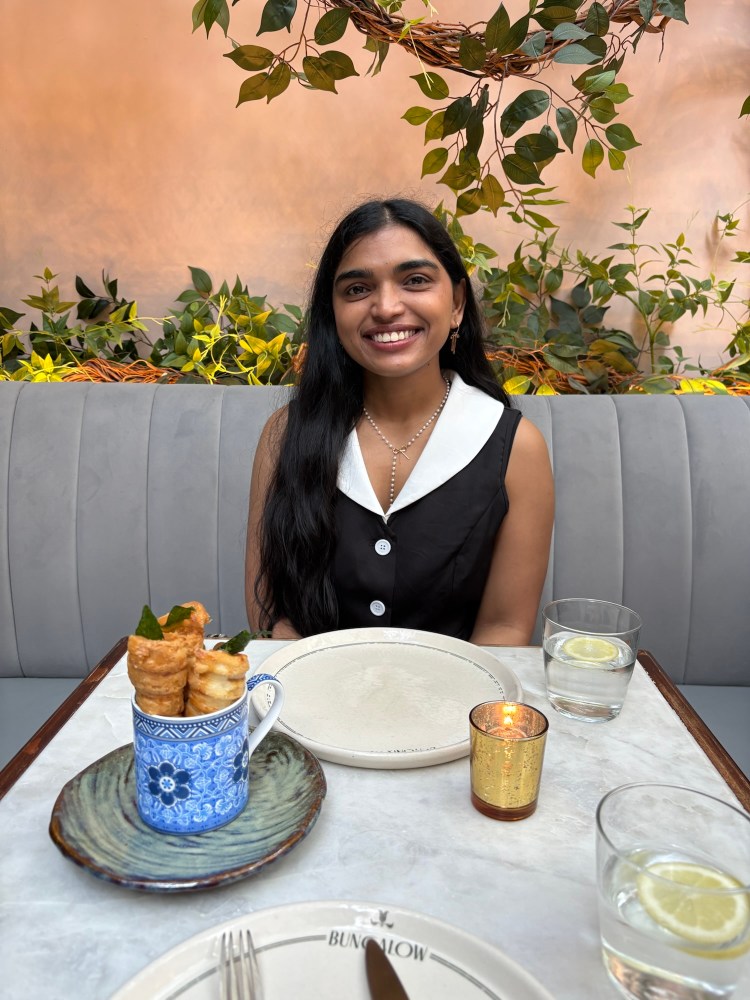
Bungalow by Vikas Khanna NYC Review: Fine Dining Indian Food with Heart

Take this review with a generous pinch of masala — I’ve been a huge fan of Chef Vikas Khanna since his MasterChef India days (yes, the crush was real), so dining at his NYC restaurant, Bungalow, was kind of a dream come true.


✨ The Vikas Sighting

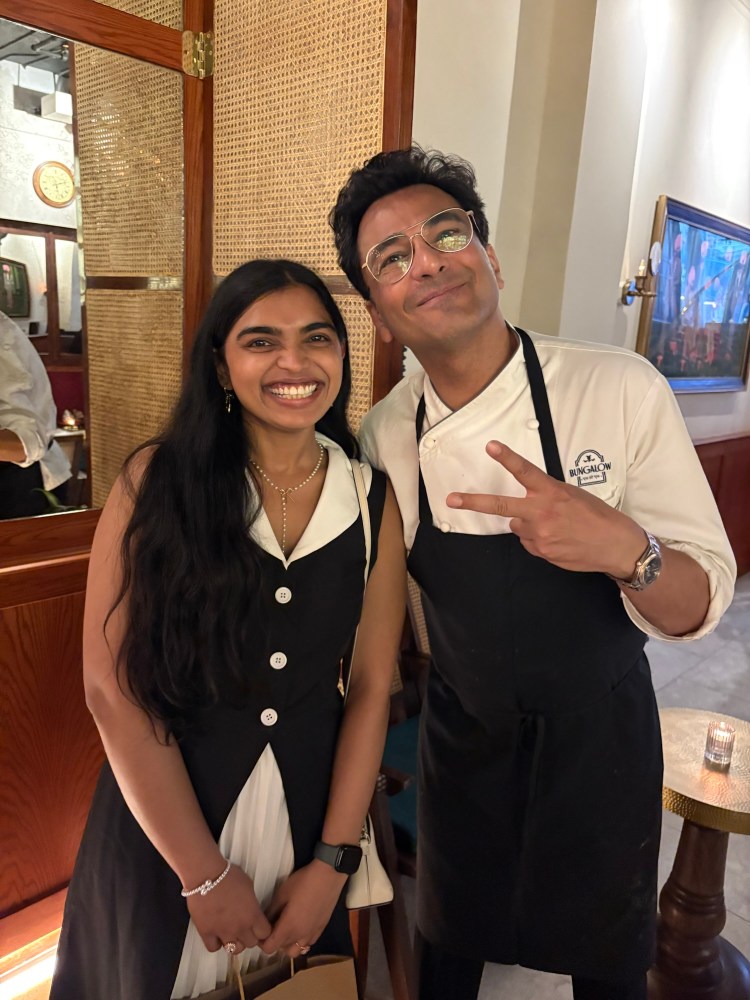
I didn’t expect him to actually be there, let alone serve us food with the warmest smile like we were guests in his home. I’m not even sure I was breathing properly — but I somehow managed to stay cool (I think??). He was gracious, humble, and made the experience so personal. Truly unforgettable. [HE SAID I LOOK BEAUTIFUL AND THAT THE LIGHT WAS FALLING PERFECTLY]

Image of the writer with the chef

📲 Getting a Reservation

Getting a table at Bungalow takes some strategy. Pro tip: reservations drop at 11 AM, 20 days in advance. You’ll need decent Wi-Fi and some determination — but it’s totally doable and 100% worth it.


🌆 The Vibe

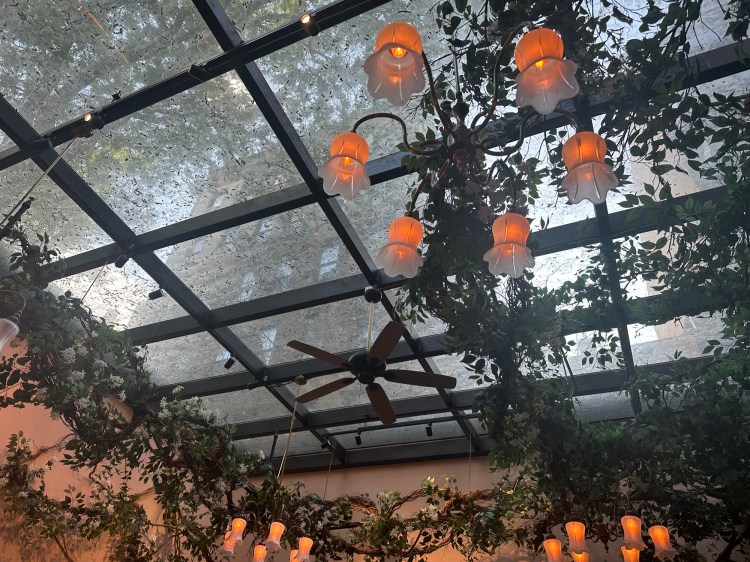
The space is gorgeous. Think luxe without being stuffy. Yes, it was a bit loud at times — but that mostly depends on the crowd. For us, it felt lively and full of joy. The music was an absolute vibe — if you’re a ’90s kid, you’ll be bopping along between bites. Service was quick, friendly, and refreshingly Indian in its warmth and attentiveness.


🍤 Starters That Slap

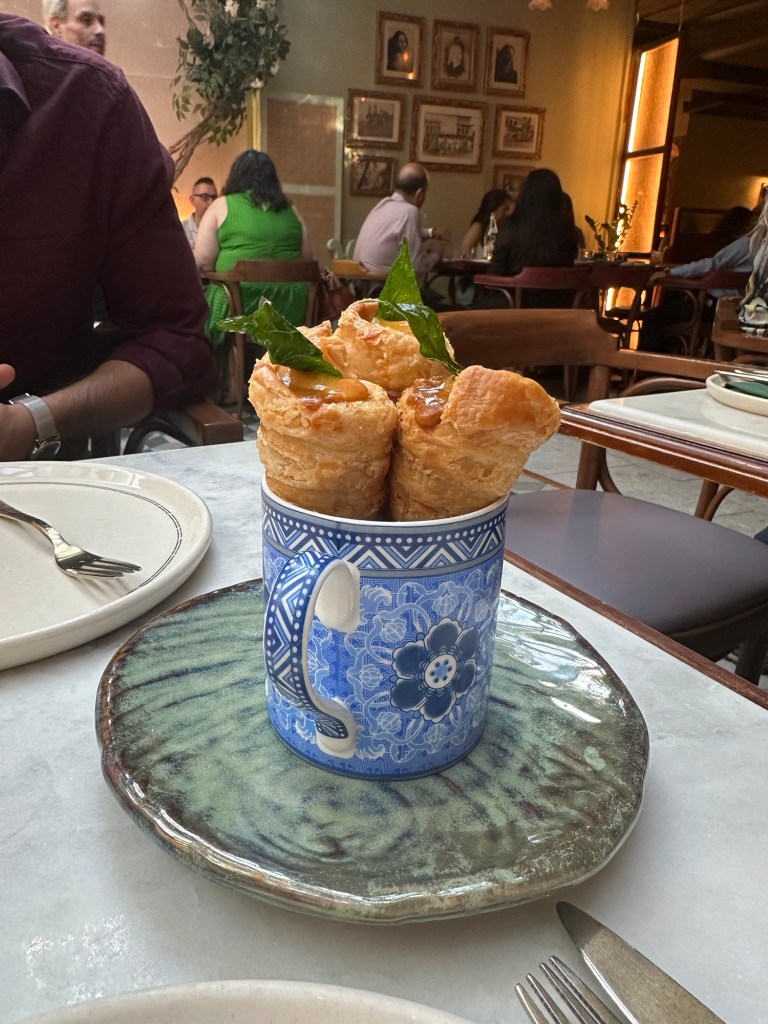
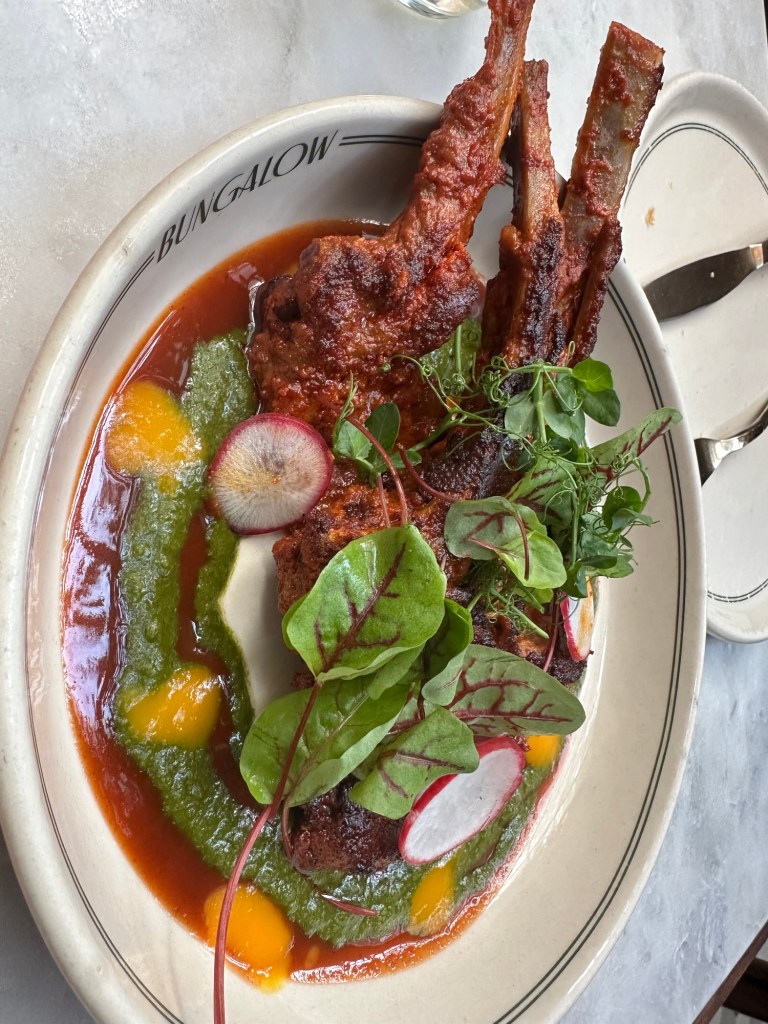
We began with the Shrimp Balchao Cones and Ammi’s Lamb Chops.

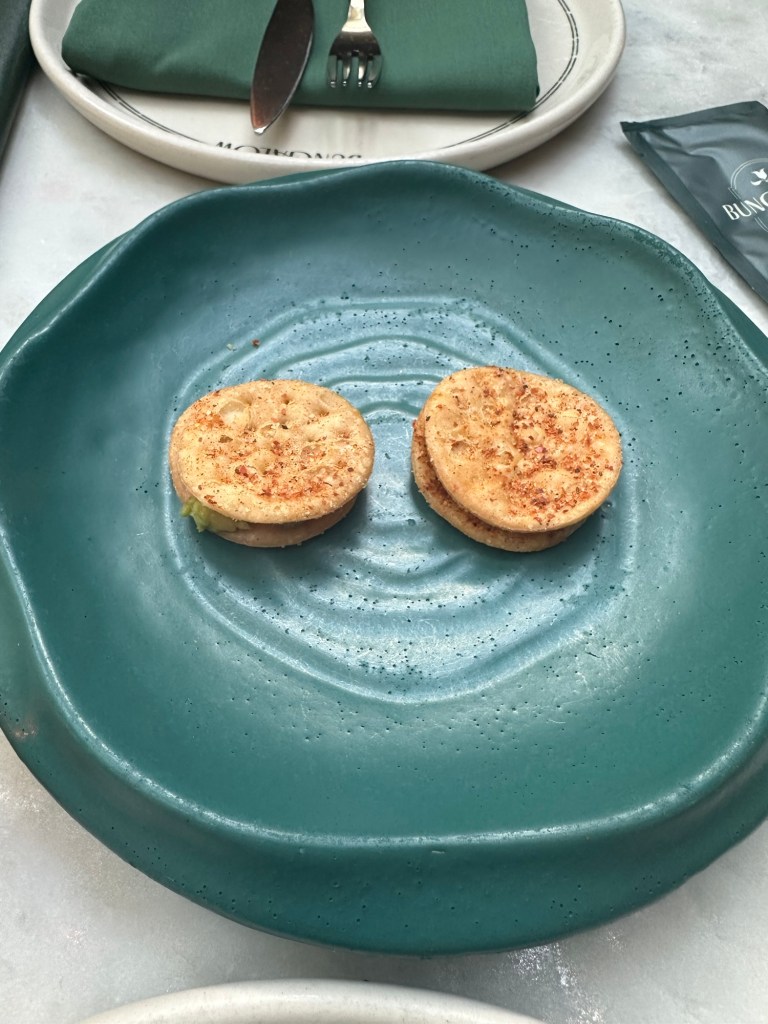
  • They started us off with a little complementary something that tasted like an elevated version of sukha puri (sorry, I forgot the name of the dish)
  • The shrimp cones were playful, punchy, and wrapped in a crisp pastry shell — a savory twist on something that felt nostalgic yet new.
  • But the lamb chops? Chef’s kiss. Tender, juicy, and bathed in a sauce that I quite literally licked clean. No shame.

🍛 Mains That Mean Business

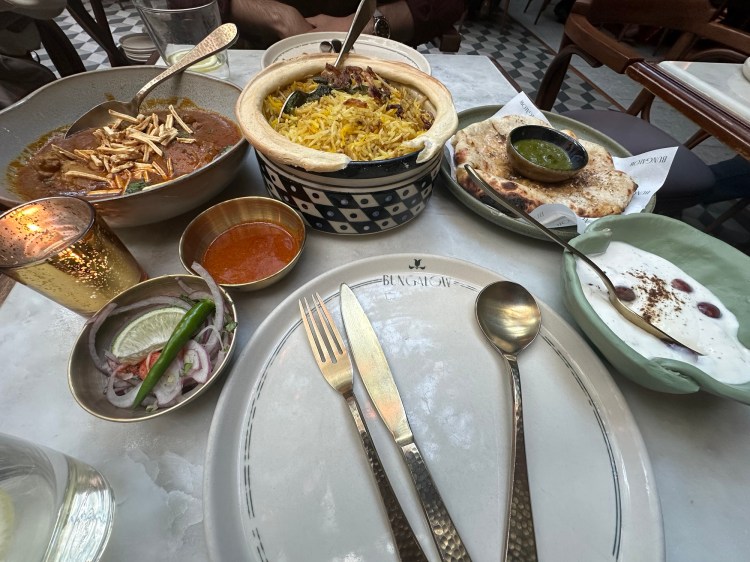
For our entrées, we ordered the Chicken Salli (apparently pronounced sAAli) and the Biryani, with a side of the Five-Cheese Kulcha.

  • The salli and kulcha? Absolutely nailed it. Rich, flavorful, and comforting.
  • The biryani, though, fell a bit short for me. I’m the daughter of a Hyderabadi caterer — biryani is sacred in our house — so my bar is impossibly high. It wasn’t bad by any means, just didn’t hit that deep as I was hoping for.

Still, the food overall was coma-inducing — in the best way. We boxed up leftovers to save space for dessert (pro move).


🍨 Dessert with a Side of Celebration

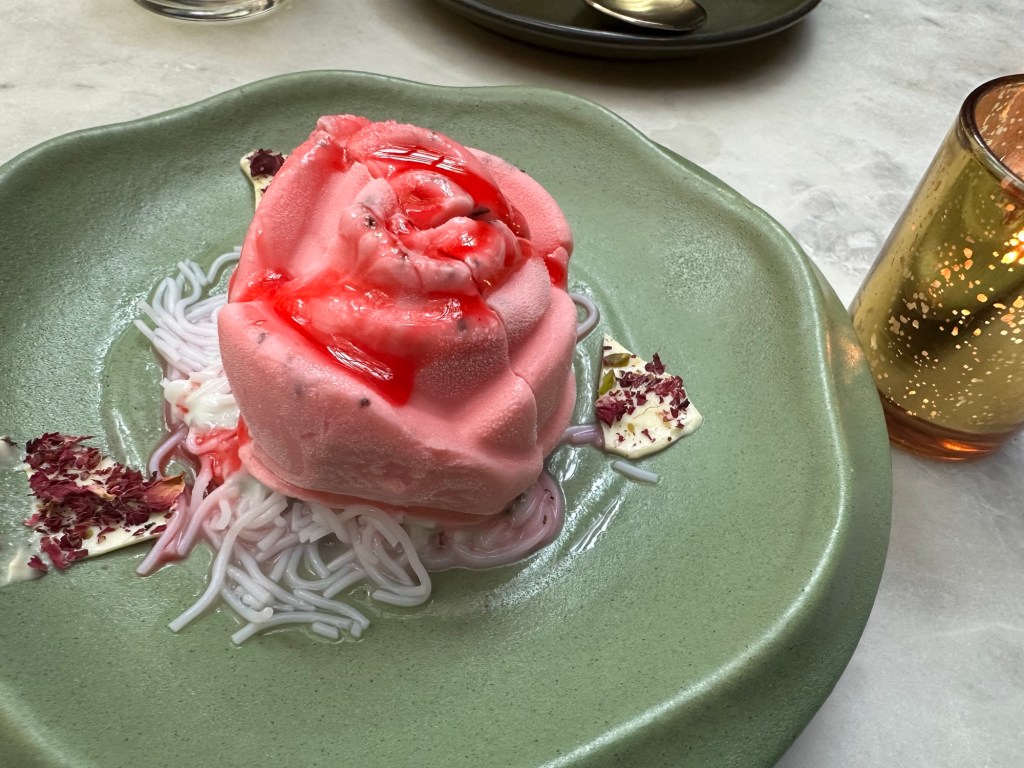
We ended with the Rose Kulfi Falooda, a rich rabdi-based dessert that looked almost too pretty to eat — until Chef Khanna himself stepped in to help us cut into it. Iconic.
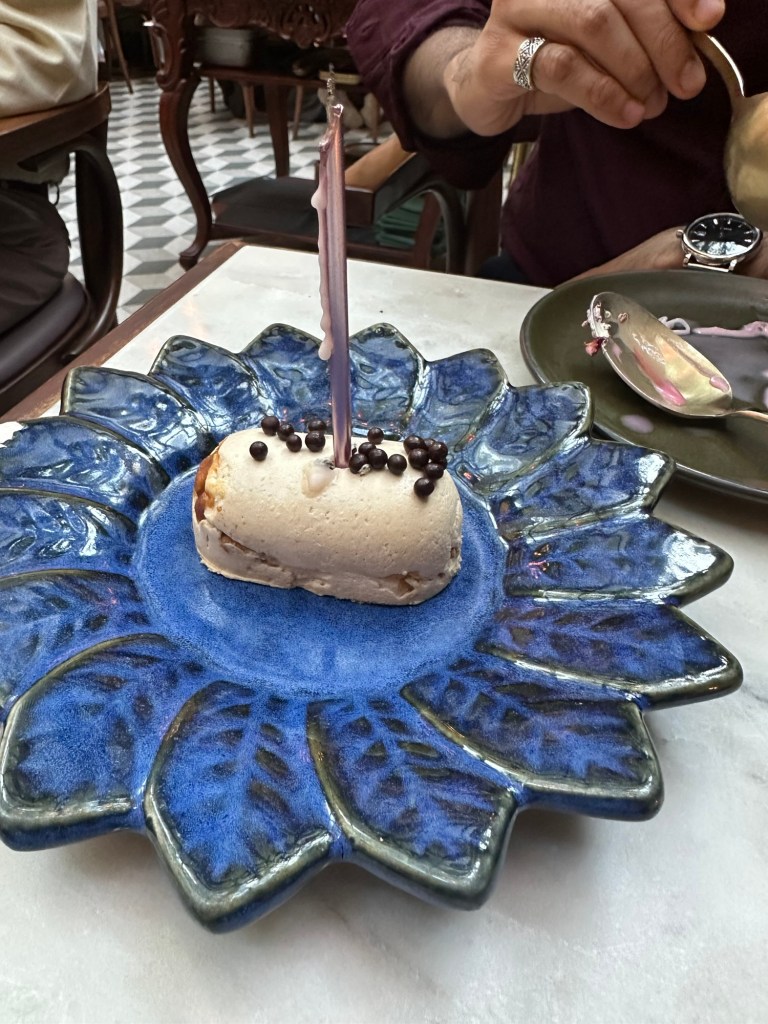
We were celebrating my friend’s PhD defense, and to top it off, they surprised us with a complimentary Tiramisu (which just so happened to be their favorite dessert). A+ for thoughtful touches.


🧂 The Final Bite

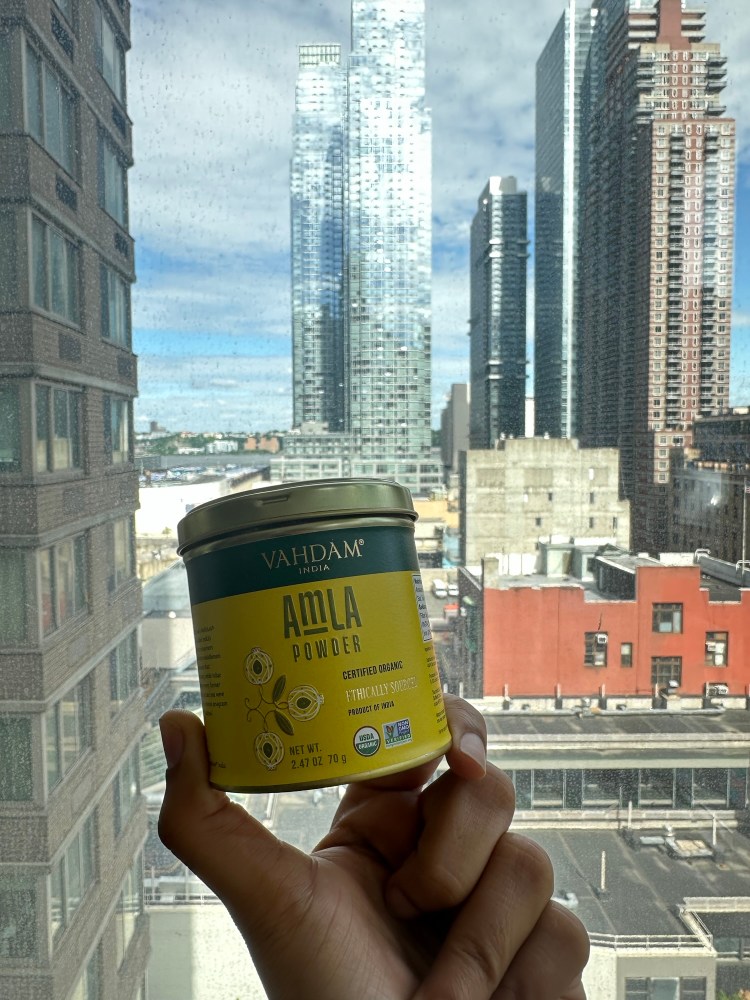
The bill came with a jar of complimentary Amla powder. A 20% gratuity was already included in the bill, but that’s what we typically tip anyway, so no complaints there.

Would I go back? In a heartbeat.


Overall Rating: 4.8/5


Despite its star-studded aura, Bungalow isn’t intimidating — it’s soulful, warm, and bursting with heart. And honestly? It wasn’t wildly expensive either, especially considering the quality, ambiance, and personal touches.

If you love Indian food that’s bold, beautiful, and cooked with soul — and if you’re even half as starstruck as me — Bungalow is a must.


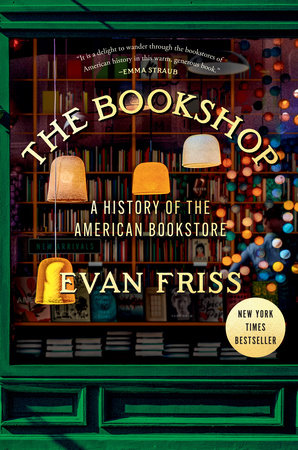
📚 Book Review: The Bookshop: A History of the American Bookstore by Evan Friss – 5/5 ⭐ | A Bookworm’s Dream ✨📖☕

In my ✨ highly ambitious and slightly chaotic ✨ project to read every 2024 Goodreads Choice Award winner (because why not torture myself with genres I usually avoid 😂), I stumbled onto The Bookshop by Evan Friss…
AND OMG 🫶 THIS. WAS. THE. BEST. DECISION. EVER.

As someone who loves spending hours in cozy book cafes ☕📚 (and who may or may not secretly plan to open one someday with fairy lights and hidden nooks 🧚‍♀️✨), this book was like a giant warm hug. It’s a love letter to every bibliophile’s dream. 🥹

📚✨ Scroll down for a list of bookstores mentioned in the final chapter — spoiler alert: they’re all (or were!) owned by famous authors! 💬💥 Bookish dreams, incoming!

“An affectionate and engaging history of the American bookstore and its central place in American cultural life… from Benjamin Franklin’s first store to Amazon Books, via iconic indies like The Strand and Gotham Book Mart. The Bookshop draws from rich archival material to celebrate the evolution—and endangered magic—of bookstores.”

Bookstores have always been unlike any other kind of store, shaping readers and writers, and influencing our tastes, thoughts, and politics. They nurture local communities while creating new ones of their own. Bookshops are powerful spaces, but they are also endangered ones. In The Bookshop, we see those stakes: what has been, and what might be lost.

Evan Friss’s history of the bookshop draws on oral histories, archival collections, municipal records, diaries, letters, and interviews with leading booksellers to offer a fascinating look at this institution beloved by so many. The story begins with Benjamin Franklin’s first bookstore in Philadelphia and takes us to a range of booksellers including The Strand, Chicago’s Marshall Field & Company, Gotham Book Mart, specialty stores like Oscar Wilde and Drum and Spear, sidewalk sellers of used books, Barnes & Noble, Amazon Books, and Parnassus. The Bookshop is also a history of the leading figures in American bookselling, often impassioned eccentrics, and a history of how books have been marketed and sold over more than two centuries—including, for example, a 3,000-pound elephant who appeared to sign books at Marshall Field’s in 1944.

The Bookshop is a love letter to bookstores, a charming chronicle for anyone who cherishes these sanctuaries of literature, and essential reading to understand how these vital institutions have shaped American life—and why we still need them.

🏷️ Genre: Nonfiction 📚; History 🏛️;

🚨 Trigger Warnings: None! (Unless you count heartbreak over closed bookstores 😭)


Unlike a dry academic history (which, let’s be real, I feared), this book FLOWS like a beautifully told story. 🌊 Evan Friss weaves together adorable anecdotes 🐘 with deeply fascinating cultural shifts 📜, from Franklin’s printing days to the rise (and sometimes sad fall) of bookstore legends.

Each chapter felt like wandering into a different quirky bookstore aisle—some familiar, some wildly unexpected (Aryan Bookstore?? Yikes 😬). And there’s even a chapter about the smell of bookstores 🥰📖 (scientifically proven magic, I’m convinced).


Okay, technically nonfiction = no fictional characters… but THE PEOPLE!!!
Friss introduces unforgettable real-life legends: from Marcella Burns Hahner (aka “The Czarina” who literally dragged customers to buy books 😂) to powerhouse booksellers shaping not just bookstores but publishing history itself.

And let’s not forget all the quirky, passionate, slightly bonkers booksellers that make you want to immediately apply for a job at Three Lives & Company.


America’s bookstore landscape is a full-on character here. 🗺️ Every city, every little dusty shop, every massive superstore like Marshall Field’s feels so vivid you could smell the paper and coffee. ☕📖

The decline in independent bookstores absolutely broke my heart 💔 (5,591 bookstores in 2021 vs. 13,499 in 1993 😭) but the love Friss shows for these sanctuaries shines SO BRIGHT. ✨


  • Luscious storytelling ✍️
  • Brilliant research 🕵️‍♂️ without info-dumping
  • Anecdotes that kept it light and unputdownable 🫶
  • Pure nostalgia and emotional resonance for book lovers 📚💕

  • Honestly??? NOTHING.
    (Unless you count me wishing it had an extra 300 pages 😂 I could live in this book.)


The Bookshop is a rich, affectionate love song to bookstores—both the ones we know and the hundreds we can only dream of visiting. 🎶✨
If you’re the kind of person who thinks heaven probably smells like old books and fresh coffee ☕📖, this needs to be your next read.

Every day, I feel incredibly grateful that I live in Boston 🏙️❤️—a city that not only breathes history but also fiercely cherishes its indie bookstores.
In fact, reading this made me even more determined to finally walk the Freedom Trail 🚶‍♀️🗺️! The Old Corner Bookstore, which played such a huge part in American literary history, is a stop along the way! 🏛️📚
It’s like this book planted a little adventure seed in my mind—and now I can’t wait to explore my city’s bookish past even deeper. 📜✨

P.S. Evan Friss… can we PLEASE get a sequel covering bookstore history in other parts of the world too? 🇮🇳🙏 Because I would devour a history of Indian bookshops! 📚❤️


  • Lawrence FerlinghettiCity Lights Bookstore, San Francisco 🌉📚
  • Larry McMurtryBooked Up, Archer City, Texas 🤠📖 (Permanently closed now)
  • Jonathan LethemRed Gap Used Books, Blue Hill, Maine 🌲📚
  • Louise ErdrichBirchbark Books and Native Arts, Minneapolis, Minnesota 🌿✨
  • Garrison KeillorCommon Good Books, St. Paul, Minnesota 📚🌟 (I think it’s sold?)
  • Jeff KinneyAn Unlikely Story, Plainville, Massachusetts 🏡📖 (DIARY OF A WIMPY KID AUTHOR HAS A BOOKSTORE IN MA? WHY HAVE I NOT VISITED?)
  • Judy BlumeBooks & Books, Key West, Florida 🏝️📚
  • Emma StraubBooks Are Magic, Brooklyn, New York ✨📚 (IK what I am doing when I visit NY next)
  • Lin-Manuel MirandaDrama Book Shop, New York City 🎭📖

Run, don’t walk, to grab The Bookshop if you love:
🏡 Cozy bookstores
📜 History that reads like a story
📖 Bibliophile dreams coming to life

5/5 ⭐ A soul-soothing masterpiece. ✨


I Watched “Adolescence” for the Plot, But the Pain Is What Stayed With Me 💥😭

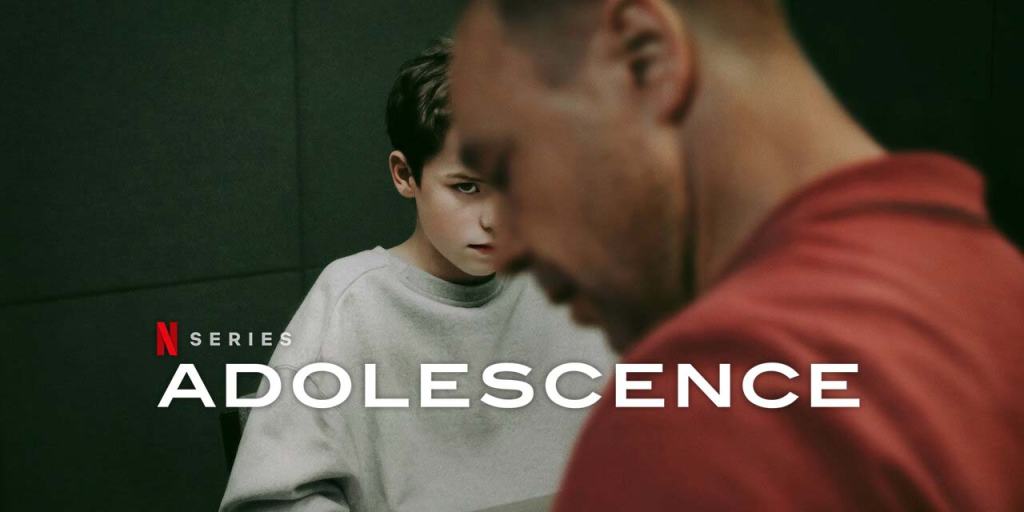
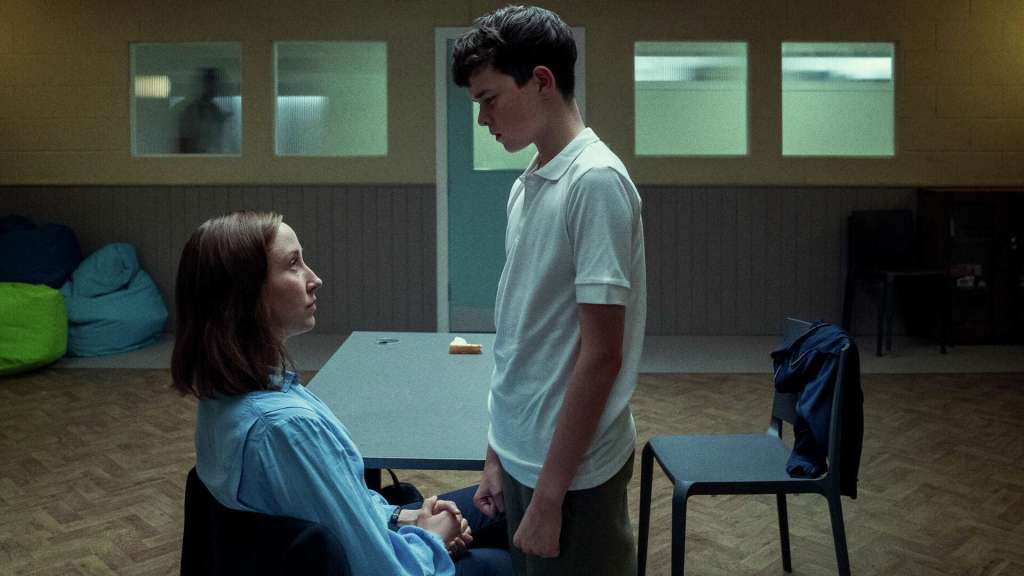
"Adolescence Netflix series promotional image featuring Jamie Miller (Owen Cooper) and Eddie Miller (Stephen Graham) in an emotional police interrogation scene."

If you’re diving into Adolescence on Netflix thinking it’s your next juicy murder mystery… well, think again 👀. This British psychological crime drama is less about whodunit and way more about what comes next — the messy, painful aftermath of a tragedy. 😢💥

Created by Jack Thorne and Stephen Graham, and directed by Philip Barantini, Adolescence delivers an unforgettable, gut-punching look at a young boy’s descent into darkness… all shot in breathtaking one-take episodes. 🎬🔥


Set in a small English town, 13-year-old Jamie Miller (Owen Cooper) is arrested for the murder of his classmate Katie Leonard. 🚔💔 As the police investigation unfolds, Jamie’s family is torn apart by community backlash, and chilling insights into Jamie’s online life — from bullying to toxic manosphere influences — begin to emerge.

This is not just a crime drama. It’s a reflection of the terrifying pressures modern teens face and how families struggle to survive the unimaginable. 😔🏚️

Trigger Warnings: ⚠️ The show tackles some heavy themes including murder, bullying, online harassment, misogyny, and mental health struggles. Proceed with care, friends. 💛


I knew going in that Adolescence wasn’t going to be a murder mystery… but still, part of me expected the murder to be the driving force of the story. 🕵️‍♀️🔪 Instead, what we get is something raw, slower, and much more real — the emotional wreckage left behind.

It focuses intensely on the immediate aftermath: the family dynamics, the social backlash, and the terrifying reality that a child so young could even end up in such a place, grappling with bullying, online hatred, and warped self-image at 13 years old. 😔🏚️

Honestly, it’s haunting — but also a little jarring if you’re expecting a more traditional “investigation” arc. The ending didn’t land super hard for me because there was no big wrap-up after Jamie’s guilty plea… but honestly? Maybe that’s the point. Sometimes life doesn’t give you closure. 😶


The acting in this show absolutely destroyed me (in the best way) 😭💔.

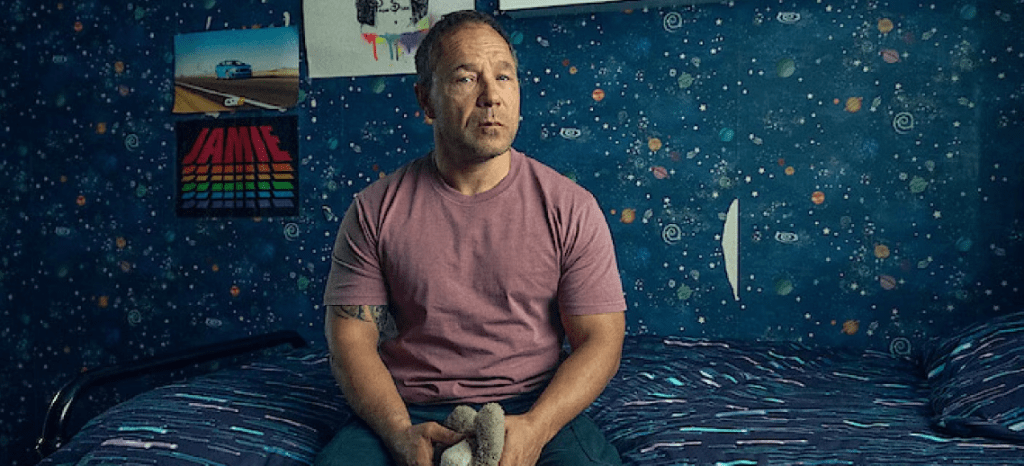
  • Stephen Graham as Eddie Miller (Jamie’s dad) brings so much quiet devastation to the screen. I felt every ounce of his heartbreak, I cried with him.
"Stephen Graham as Eddie Miller sitting on a bed, looking emotional in Netflix’s Adolescence series."
  • Erin Doherty as Briony Ariston (the forensic psychologist) was another standout — she brought such layered warmth and discomfort to her scenes. 🧠🖤
  • And of course, Owen Cooper as Jamie… especially in Episode 3? OH. MY. GOD. 🧨 He carried so much pain and confusion in his performance. 🥲
"Erin Doherty as Briony Ariston and Owen Cooper as Jamie Miller share an emotional moment in a secure facility in Netflix’s Adolescence series."

Seriously — these performances alone are worth watching the show for.


Adolescence holds a brutal mirror up to modern youth culture:

  • Cyberbullying 😈💻
  • Toxic masculinity 🧠💀
  • The terrifying loneliness of growing up in an online-first world 😢🌐

It asks: How do children internalize cruelty? What happens when pain turns into violence?
It’s chilling… because it’s way too close to reality. ⚡

Also, sidenote: ARE BRITISH KIDS REALLY THIS MEAN TO THEIR TEACHERS AND PEERS?! 😱 Because… yikes. I’m scared.


✅ The acting — masterclass across the board.
✅ The gritty, almost documentary-like atmosphere — you feel like you’re trapped in the nightmare with the family. 🎥🔥


⚡ The pacing in some parts (especially episode 4) felt slow — especially if you’re waiting for “something to happen.”
⚡ The ending was a little unsatisfying emotionally… though maybe that was intentional.
⚡ It might confuse audiences who go in expecting a traditional crime thriller — I was a little thrown myself. 🤯


Adolescence isn’t an easy watch — but it’s an essential one. 💥💔 It dives headfirst into uncomfortable questions without giving easy answers. If you’re up for something raw, uncomfortable, and beautifully acted, give it a shot. 🎬✨

Just… don’t expect a classic whodunit. This is much messier — and much more real. 😶‍🌫️

👉 What did you think about Adolescence? Was it what you expected? Are you still crying like me?! 😂😭 Drop a comment below — I’m dying to hear your thoughts! 🎤💬👇


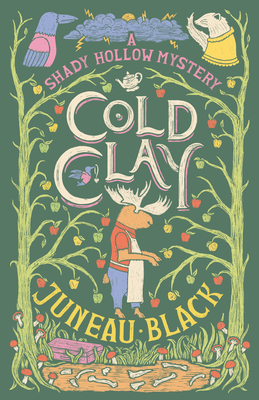
Book Review: Cold Clay by Juneau Black – 3/5 | Cozy Vibes, Cold Plot & Predictable Twists 🕵️‍♀️🍂❄️

I returned to the charming little woodland town of Shady Hollow, hoping for more cozy vibes, more critter drama, and maybe a sprinkle of murder—and Cold Clay definitely delivered (with a few bumps along the trail).


The second book in the Shady Hollow series, in which some long-buried secrets come to light, throwing suspicion on a beloved local denizen.

It’s autumn in Shady Hollow, and residents are looking forward to harvest feasts. But then a rabbit discovers a grisly crop: the bones of a moose.

Soon, the owner of Joe’s Mug is dragged out of the coffeeshop and questioned by the police about the night his wife walked out of his life–and Shady Hollow–forever. It seems like an open-and-shut case, but dogged reporter Vera Vixen doesn’t believe gentle Joe is a killer. She’ll do anything to prove his innocence… even if it means digging into secrets her neighbors would rather leave buried.


Trigger Warnings: Murder


I LOOOVE THE SHADY HOLLOW WORLD 🦊🌲✨

Seriously—this cozy woodland murder town has me in a chokehold. The setting? Adorable. The vibes? Immaculate. The ANIMALS LIVING THEIR BEST (and sometimes messy) LIVES? Obsessed.

This second installment deepens the world in all the right ways. We get more insight into the daily lives and relationships of the residents, and it feels like slipping into a warm, flannel-lined universe. ALSO—can we talk about the animal puns?? “Worked our paws off?” YES. That’s all it takes. I am EASILY PLEASED and I make no apologies 🐾

Plot-wise? Eh… not as strong. It’s another murder—but this time, a cold case from a decade ago. And listen… I love a cozy whodunnit, but this one? It was so predictable. Like, painfully obvious. A new person shows up in town? Acting sus from page one? Gee, I WONDER IF THEY’RE CONNECTED TO THE MURDER 🙃

Did the authors know we’d figure it out instantly? I kinda think they did… which makes it almost campy. I wasn’t mad about it, but I definitely wasn’t shocked either.

That said—watching our fave investigative reporter Vera Vixen 🦊 piece everything together was still FUN. I absolutely loved how she’s learning from her past mistakes and being more thoughtful about how she handles the investigation (character growth?? We love to see it 👏). I felt like I knew enough to follow the mystery but still wanted more from the overall narrative.

And am I gonna read the next one? HELL YEAH. I already bought the books soooo 🤷‍♀️

Because sometimes you don’t need twists and turns. Sometimes you just need forest creatures sipping coffee and uncovering small-town secrets 🍁🦉☕


Cold Clay gave me exactly what I came for: cozy woodland vibes, quirky characters, and a light mystery to keep things moving. It wasn’t shocking, but it was comforting—and sometimes, that’s exactly what I’m looking for in a read. If you’re into soft mysteries with charm for days (and animal puns), Shady Hollow continues to deliver 🦝📖


Design a site like this with WordPress.com
Get started